In today’s fast-paced world, getting goods from point A to point B efficiently and without a hitch is a big deal. Traditional ways of managing supply chains often get messy, with lost paperwork, delays, and sometimes, outright fraud. It’s like trying to follow a recipe with half the ingredients missing and no clear instructions. That’s where blockchain in supply chains comes in, offering a new way to keep track of everything that’s happening, making things clearer and more secure for everyone involved.
Key Takeaways
- Blockchain technology provides a shared, unchangeable record of transactions, making supply chains more transparent.
- It allows for real-time tracking of goods from start to finish, helping to prevent counterfeit products.
- Automating tasks and using smart contracts with blockchain can speed up processes and cut down on paperwork.
- The secure nature of blockchain helps prevent fraud and makes data more reliable.
- Blockchain can improve how inventory is managed and make payments faster and simpler.
Understanding The Current Supply Chain Landscape
Challenges Within Traditional Supply Chains
Think about how goods get from where they’re made to your hands. It sounds simple, right? But in reality, traditional supply chains often feel like a tangled mess. Information gets lost, paperwork piles up, and sometimes, it’s hard to know exactly where a product is or where it’s been. This lack of clarity can lead to all sorts of problems, like unexpected delays, higher costs, and even mistakes in inventory. It’s like trying to follow a complex recipe with missing steps and smudged ingredients – frustrating and prone to errors.
Here are some common issues we see:
- Information Silos: Different companies involved in moving goods often keep their data separate, making it hard to get a complete picture.
- Manual Processes: Relying on paper or outdated digital systems means more chances for human error and slower operations.
- Limited Visibility: It’s often difficult to track products in real-time, which can cause problems if something goes wrong.
- Dispute Resolution: When issues arise, sorting them out can be a lengthy and complicated process due to the lack of a single, agreed-upon record.
These everyday hurdles mean that getting products where they need to go efficiently isn’t always straightforward. It impacts everything from how quickly you receive an order to the final price you pay.
The Growing Need for Supply Chain Innovation
Because of these challenges, there’s a big push to find better ways to manage supply chains. We need systems that are more open, more reliable, and quicker to respond to changes. The old ways just aren’t cutting it anymore in today’s fast-moving world. Businesses are looking for solutions that can bring more order to the chaos, making the whole process smoother and more predictable. This isn’t just about making things a little bit better; it’s about fundamentally rethinking how goods move from start to finish. The goal is to create supply chains that are not only efficient but also more trustworthy for everyone involved, from the manufacturer to the end consumer. This drive for improvement is pushing the industry towards new technologies that can offer a fresh perspective on old problems. The current state of technology stocks shows that innovation is a key driver in many sectors, and supply chains are no exception Technology stocks are experiencing gains, though supply chain concerns persist, impacting specific sectors. Key economic indicators are also being monitored..
Bridging Gaps with Blockchain Technology
This is where blockchain technology comes into play. Originally known for its use in cryptocurrencies, blockchain is now being recognized for its potential to fix many of the issues plaguing traditional supply chains. At its core, blockchain is a shared, digital ledger that records transactions across many computers. This means that once information is added, it’s extremely difficult to change or delete, creating a secure and transparent history of events. Imagine a digital logbook that everyone involved can see and trust, but no single person can alter. This technology offers a way to connect disparate systems and provide a single source of truth, helping to close the gaps that cause so many problems today. It’s about building a more connected and reliable network for moving goods.
Key Applications Of Supply Chain On Blockchain
Blockchain technology is really changing how we handle supply chains, moving beyond just tracking packages. It’s about making the whole system smarter and more reliable. Let’s look at some of the main ways it’s making a difference.
Smart Contracts For Automated Processes
Think of smart contracts as digital agreements that automatically do what they say they will, without needing a middleman. When certain conditions are met – like a shipment arriving at its destination – the contract can automatically trigger payments or release goods. This cuts down on a lot of paperwork and speeds things up considerably. It means fewer delays and less chance of human error. This automation is a big step towards a more efficient supply chain.
Real-Time Tracking And Enhanced Traceability
One of the biggest wins with blockchain is knowing exactly where your goods are at any given moment. Every step of a product’s journey, from the factory floor to the delivery truck, can be recorded on the blockchain. This creates a clear, unchangeable history for each item. This level of detail helps prevent issues like lost shipments and makes it easier to manage inventory. It’s like having a super-detailed map of your product’s travels, accessible to everyone who needs to see it. This improved visibility is a game-changer for managing complex logistics, and it’s something many businesses are looking to implement for better supply chain operations.
Combating Counterfeit Products With Blockchain
Counterfeit goods are a huge problem, costing industries billions and posing risks to consumers. Blockchain offers a powerful way to fight this. By creating a unique digital identity for each product and recording its entire history on the blockchain, it becomes much harder for fakes to enter the supply chain. Consumers can even scan a product’s code to verify its authenticity, building trust and protecting brands. It’s a way to ensure that what you’re buying is the real deal.
Here’s a quick look at how blockchain helps:
- Immutable Record: Once a product’s journey is logged, it can’t be altered, preventing fraudulent entries.
- Unique Digital IDs: Each item gets a distinct identifier that’s tracked from creation.
- Verification: Consumers and partners can easily check the product’s history to confirm its legitimacy.
- Reduced Risk: Lessens the chance of counterfeit items reaching the market.
The ability to create a verifiable and tamper-proof record of a product’s origin and movement is a significant advantage in the fight against illicit goods. This transparency builds confidence throughout the entire chain.
Leveraging Blockchain For Enhanced Logistics
When we talk about making supply chains work better, blockchain technology really shines. It’s not just about keeping records; it’s about making the whole process of moving goods more open and reliable. Think of it as adding a layer of trust and clarity that was often missing before.
Improving Transparency And Coordination
One of the biggest wins with blockchain is how it opens things up. Everyone involved, from the manufacturer to the final delivery person, can see the same information. This shared view means fewer misunderstandings and quicker problem-solving. It’s like having a single source of truth that everyone agrees on.
- Real-time visibility: Track goods as they move, seeing exactly where they are and when they arrived.
- Reduced disputes: Clear, unchangeable records mean disagreements about shipments or payments are much easier to sort out.
- Better collaboration: When everyone has access to the same data, working together becomes smoother and more efficient.
The ability to see the journey of a product from start to finish, without any hidden steps, builds confidence among all parties. This transparency helps catch issues early, before they become big problems.
Optimizing Stock Levels And Reducing Costs
Having accurate, up-to-the-minute information about inventory is a game-changer. Blockchain, especially when paired with other tech, helps companies know exactly what they have and where it is. This means less money tied up in excess stock and fewer lost sales due to stockouts.
- Accurate inventory counts: Know precisely how much of an item is available and where.
- Predictive ordering: Use data to forecast demand more accurately, ordering just what’s needed.
- Reduced waste: Less overstocking means less product expiring or becoming obsolete.
Integrating IoT For Accurate Data Updates
To really get the most out of blockchain, we often connect it with devices from the Internet of Things (IoT). These devices, like sensors on containers, can automatically record data like temperature, location, or humidity. This information is then added to the blockchain, creating a very precise and trustworthy record of a product’s condition throughout its journey. It’s a powerful combination that makes the data on the blockchain even more reliable.
| Data Point | Traditional Method | Blockchain + IoT Method |
|---|---|---|
| Temperature | Manual checks | Automated sensor logs |
| Location | Periodic updates | Real-time GPS tracking |
| Humidity | Infrequent checks | Continuous monitoring |
Unlocking New Opportunities With Blockchain
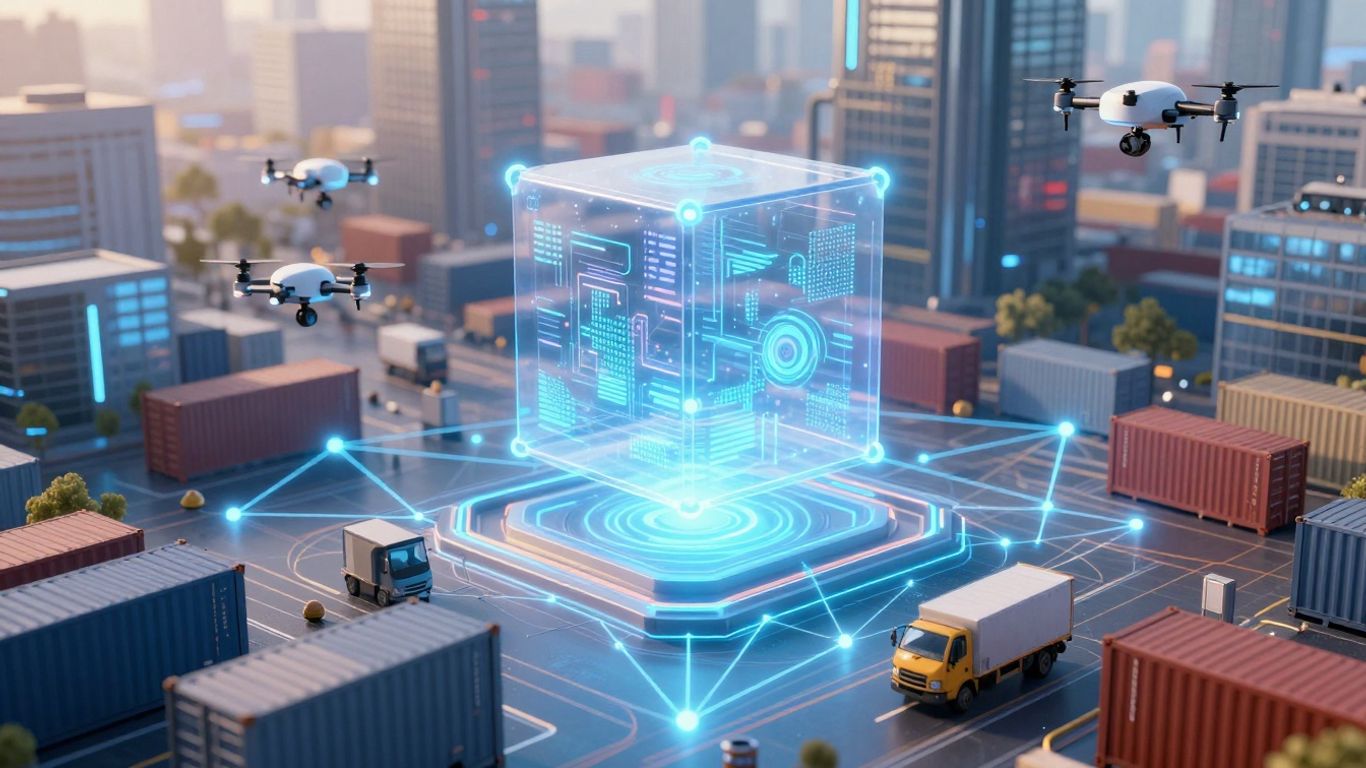
Beyond just fixing existing problems, blockchain is opening doors to entirely new ways of doing business in supply chains. It’s creating possibilities that weren’t practical before, moving beyond simple efficiency gains to fundamentally alter how value is created and shared.
New Financing Models For Supply Chains
Traditional supply chains often face challenges in accessing capital. However, with blockchain, verifiable data on goods in transit and inventory can become a tangible asset. This allows companies to potentially access financing more easily, using the value of their goods as collateral. Imagine a small manufacturer being able to secure a loan based on the confirmed shipment of high-value goods, rather than relying solely on traditional credit assessments. This can significantly improve cash flow and support growth.
Enhancing Product Lifecycles And Data Monetization
Blockchain technology provides a clear, immutable record of a product’s journey from creation to its eventual end-of-life. This detailed tracking can help with more effective recycling programs, streamline refurbishment processes, and manage returns with greater accuracy. Furthermore, securely anonymized supply chain data could potentially be used to gain market insights or offer new services, creating additional revenue streams. This data, once validated on the blockchain, becomes a trustworthy asset.
Fostering Collaboration And Trust Among Partners
Global supply chains involve many different companies, and getting them all to work together smoothly can be tough. Blockchain offers a neutral ground where all partners can share information securely and transparently, building stronger relationships. This shared, single source of truth reduces disputes and misunderstandings. Automated compliance checks, managed through smart contracts, can verify if partners are meeting agreed-upon standards, whether for quality, delivery times, or ethical sourcing. With clear, immutable records of every transaction and event, resolving disagreements becomes much simpler and faster. This increased trust can lead to more resilient and efficient partnerships, much like the collaborative efforts seen in large fulfillment centers like those operated by Macy’s [818e].
The ability to share verified information across multiple parties without a central authority builds a foundation of trust that was previously difficult to achieve. This transparency is not just about visibility; it’s about creating a more reliable ecosystem for all participants.
Driving Sustainable And Ethical Practices

In today’s world, consumers and regulators alike are paying closer attention to how products are made and where they come from. Companies are facing more pressure than ever to prove their commitment to sustainability and ethical treatment of workers. This is where blockchain technology steps in, offering a way to build trust and accountability right into the supply chain.
Tracking Raw Material Origins
Blockchain provides an unchangeable record of a product’s journey, starting from the very first raw material. Imagine a t-shirt. Blockchain can track the cotton from the specific farm where it was grown, noting the farming practices used. This helps confirm that materials weren’t sourced from areas known for conflict or through environmentally damaging methods. It’s like having a digital passport for every component that goes into a product.
Verifying Fair Labor And Environmental Impact
Beyond just origins, blockchain can shed light on the conditions under which products are made. By recording details about wages, working hours, and safety measures at each step of production, companies can demonstrate fair labor practices. Similarly, data on energy consumption, water usage, and waste management can be logged, allowing for the monitoring and reduction of environmental footprints.
- Fair Wages: Records can show that workers received agreed-upon compensation.
- Safe Conditions: Documentation can verify adherence to safety protocols.
- Reduced Emissions: Tracking energy use helps identify opportunities to lower carbon output.
- Waste Management: Logging waste disposal practices promotes responsible handling.
Building Consumer Trust Through Provenance
Ultimately, this detailed, verifiable information builds significant trust with consumers. When people care about the impact of their purchases, they want proof, not just promises. Blockchain offers that proof, allowing businesses to clearly communicate their ethical and sustainable efforts. This transparency can be a powerful differentiator in a crowded market.
The ability to trace a product’s entire lifecycle, from its rawest form to the final sale, creates a new standard for corporate responsibility. It moves beyond marketing claims to demonstrable facts, fostering a more conscious marketplace.
Real-World Implementations Of Blockchain In Logistics
Revolutionizing Food Traceability
It’s pretty amazing how blockchain is changing how we track food. Think about it: knowing exactly where your food came from, all the way from the farm to your plate. This isn’t just a nice-to-have anymore; it’s becoming a necessity. Companies are using blockchain to create a clear, unchangeable record of every step a food product takes. This means if there’s ever a problem, like a contamination scare, we can pinpoint the exact source in seconds, not days or weeks. Walmart, for example, has put over 500 food items on a blockchain system. This drastically cuts down the time it takes to trace something, making it much faster to react and keep everyone safe.
Securing Pharmaceutical Supply Chains
When it comes to medicines, trust and security are everything. The pharmaceutical industry is a prime example of where blockchain can make a huge difference. It helps combat the serious issue of counterfeit drugs, which can be dangerous and undermine public health. By using blockchain, each step a medicine takes – from the manufacturer, through warehouses, to the pharmacy or hospital – is recorded. This creates a transparent trail that’s very hard to fake. It means we can be more confident that the drugs we’re using are legitimate and haven’t been tampered with. Companies like DHL and Accenture have been working on prototypes to track pharmaceuticals, making sure every product’s journey is accounted for.
Transforming Global Shipping Operations
Global shipping is incredibly complex, with so many different parties involved. Blockchain is stepping in to simplify things and bring more clarity. One big project is the TradeLens platform, developed by IBM and Maersk. It’s a system built on blockchain that helps manage shipping containers. It records billions of shipping events and has processed millions of containers. The goal is to give everyone involved – from the shipping company to customs officials – a shared, clear view of what’s happening. This kind of transparency helps reduce delays, cut down on paperwork, and generally makes the whole process of moving goods around the world much smoother and more efficient. This shared, digital ledger is key to improving coordination and cutting down on the time and cost associated with international trade.
The ability to create a single, trusted source of truth for complex, multi-party transactions is what makes blockchain so powerful in logistics. It moves us away from siloed information and towards a connected, verifiable ecosystem.
The Road Ahead For Blockchain In Supply Chain Management
So, we’ve talked a lot about how blockchain can really change things in supply chains. It’s not just about fancy tech; it’s about making the whole process of moving goods around the world more open, more secure, and just plain better. While there are still some hurdles to clear, like making sure different systems can talk to each other and figuring out all the rules, the potential is huge. Companies that start looking into this now are likely to find themselves ahead of the game. It feels like we’re just at the beginning of seeing how this technology can help build supply chains that are not only more efficient but also more trustworthy for everyone involved.
Addressing Scalability and Performance Concerns
One of the main things we need to think about is making sure blockchain systems can handle the sheer volume of transactions that happen in global logistics. Right now, some blockchains can be a bit slow and expensive when dealing with a massive number of entries. We’re seeing a lot of work being done to make these systems faster and cheaper, so they can keep up with the demands of busy supply chains. Think about how many packages move every single day; the technology needs to be able to record all of that without breaking a sweat. This ongoing development is key to widespread adoption.
The Future Role Of Blockchain In Global Trade
Looking ahead, blockchain technology is set to play an even bigger role in how goods move around the world. It’s not just about making things more secure or faster; it’s about building a more connected global trade system. As we move forward, expect blockchain to be a key player in making supply chains better for everyone involved, from the people who make the products to the end consumer. It could simplify customs processes and make international payments smoother, for example. This technology has the potential to really reshape how international commerce operates, making it more accessible and less complicated for businesses of all sizes.
Building More Efficient and Trustworthy Supply Chains
Ultimately, the goal is to create supply chains that are both highly efficient and deeply trustworthy. Blockchain provides the foundation for this by offering a shared, unchangeable record of events. This means fewer disputes, less fraud, and a clearer picture of where products come from and where they’re going. It helps build confidence among all the partners involved, from suppliers to customers. The ability to track products from their origin all the way to the consumer, with verifiable data at each step, is a game-changer for building that trust. This transparency is something consumers are increasingly looking for, especially with the rise of social commerce where product origins are often discussed on platforms like Instagram.
The journey towards fully integrated blockchain solutions in supply chain management is ongoing. While challenges remain, the benefits in terms of transparency, security, and efficiency are driving innovation and adoption. The future points towards more interconnected and reliable global trade networks.
The Road Ahead
So, we’ve talked a lot about how blockchain can really change things in supply chains. It’s not just about fancy tech; it’s about making the whole process of moving goods around the world more open, more secure, and just plain better. While there are still some hurdles to clear, like making sure different systems can talk to each other and figuring out all the rules, the potential is huge. Companies that start looking into this now are likely to find themselves ahead of the game. It feels like we’re just at the beginning of seeing how this technology can help build supply chains that are not only more efficient but also more trustworthy for everyone involved.
Frequently Asked Questions
What exactly is blockchain, and how does it help with shipping goods?
Think of blockchain as a super secure digital notebook that many people share. Every time something happens with a shipment, like it moves from one place to another, a note is added to the notebook. Because everyone has a copy and the notes are locked in with special codes, it’s almost impossible to cheat or change the information. This helps everyone involved in shipping know exactly where things are and that the information is true.
How does blockchain make supply chains more open and honest?
Blockchain creates a shared record of everything that happens to a product, from where it was made to when it arrived. Since this record is shared and can’t be easily changed, everyone can see the same information. This makes it much harder for things to get lost, faked, or messed up, leading to a more honest and clear process.
What are smart contracts, and how do they help with business deals in shipping?
Smart contracts are like automatic agreements written in computer code. They can automatically do things, like release payment once a shipment is confirmed as delivered. This means less paperwork and fewer delays because the contract handles the steps on its own when certain conditions are met.
Can blockchain help stop fake products from being sold?
Yes, it can! Blockchain can give each real product a unique digital identity that’s recorded on the shared notebook. When someone buys a product, they can check its digital history on the blockchain. If the history doesn’t match or is missing, it’s a clear sign that the product might be a fake.
Are there real companies already using blockchain for their shipping and deliveries?
Absolutely. Big companies like Walmart are using it to track food from farms to stores, making sure it’s safe. Also, shipping giants like IBM and Maersk have created systems to track containers worldwide. These examples show that blockchain is already making a difference in how goods are moved.
What’s next for blockchain in managing supply chains?
The future looks bright! Blockchain is expected to make shipping even faster, cheaper, and more trustworthy. It will help companies be more responsible by tracking where materials come from and how products are made. As more companies use it, it will help build a global trade system that works better for everyone.
The post Revolutionizing Logistics: The Power of Supply Chain on Blockchain appeared first on IntelligentHQ.
Read more here: https://www.intelligenthq.com/supply-chain-on-blockchain-2/