Control theory is beautiful on paper – elegant equations, perfectly modeled systems, textbook-perfect responses. But between the mathematical ideal and the physical system lies a gap that trips up many engineers: noise, timing constraints, actuator limits, and the stubborn reality of hardware that refuses to behave exactly as the model predicts.
Cristian Castro Lagos, a Chilean electronics engineer with nearly a decade of industrial experience and part-time professor at Pontificia Universidad Católica de Valparaíso, has made bridging that gap his specialty. His GitHub portfolio is packed with meticulously documented projects that show exactly how control theory becomes embedded reality – complete with system identification, controller design, discretization, and real-time validation. And Arduino has been his platform of choice for rapid prototyping and experimentation throughout that journey.
We caught up with Cristian to learn more about his approach to making advanced control engineering tangible, reproducible, and accessible.
Closing the gap between theory and hardware
How did you first get interested in electronics and embedded systems?
My interest in electronics grew from a realization during my engineering studies: control theory only becomes truly meaningful when it interacts with physical systems.
The first time I implemented a digital controller on a microcontroller and observed the physical response match the mathematical model, everything connected. That experience showed me that embedded systems are the bridge between theory and reality – and I decided to focus my work on building that bridge properly.
What role did Arduino play in your academic training, and how do you still use the platform today?
Arduino played a crucial role in my education because it allowed me to prototype control algorithms quickly and focus on system behavior rather than low-level hardware barriers.
In my projects today, I combine academic training and industrial experience. The former provides structured thinking and mathematical rigor, while the latter forces you to deal with uncertainty, noise, and constraints.
I design controllers analytically, but I validate them under real-world conditions. For this, I use Arduino compatible platforms as experimental control laboratories, allowing me to implement real-time digital controllers, validate models, analyze disturbances, and test robustness. It’s not just a learning tool – it is a rapid-development platform for serious embedded control experimentation.
You maintain an active GitHub with documented projects that others can learn from and build upon. What motivated you to start sharing your work publicly?
I realized that many engineers understand control theory conceptually but struggle to see how it is implemented in real hardware.
By documenting complete workflows – from system identification to embedded deployment – I aim to make advanced control engineering tangible and reproducible.
Sharing also improves my own thinking. When you explain something clearly, you refine your engineering process.
Is there a particular project you’re especially proud of?
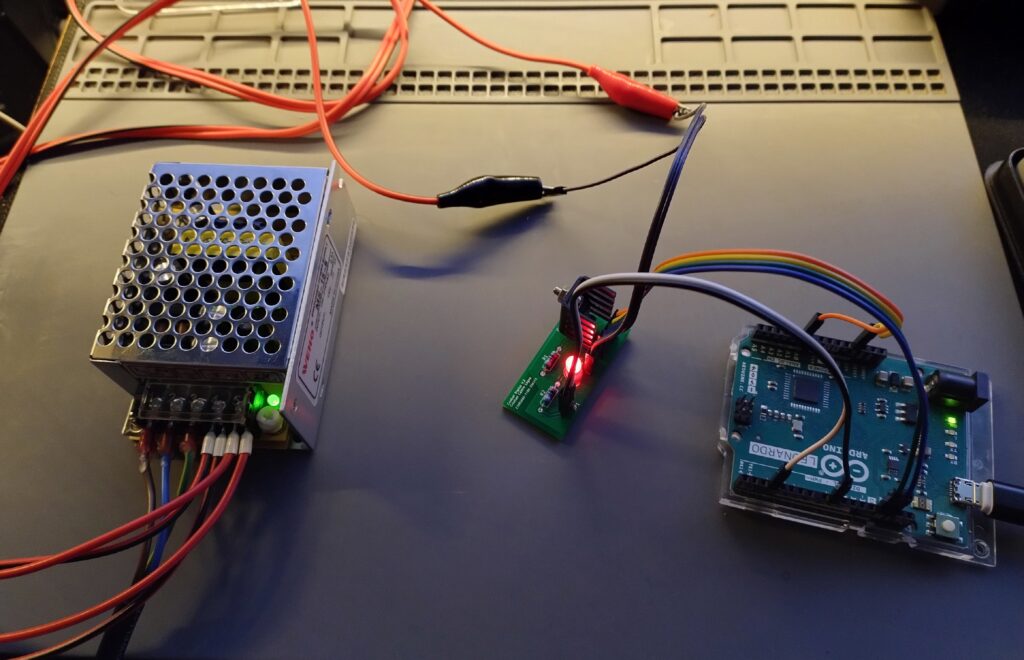
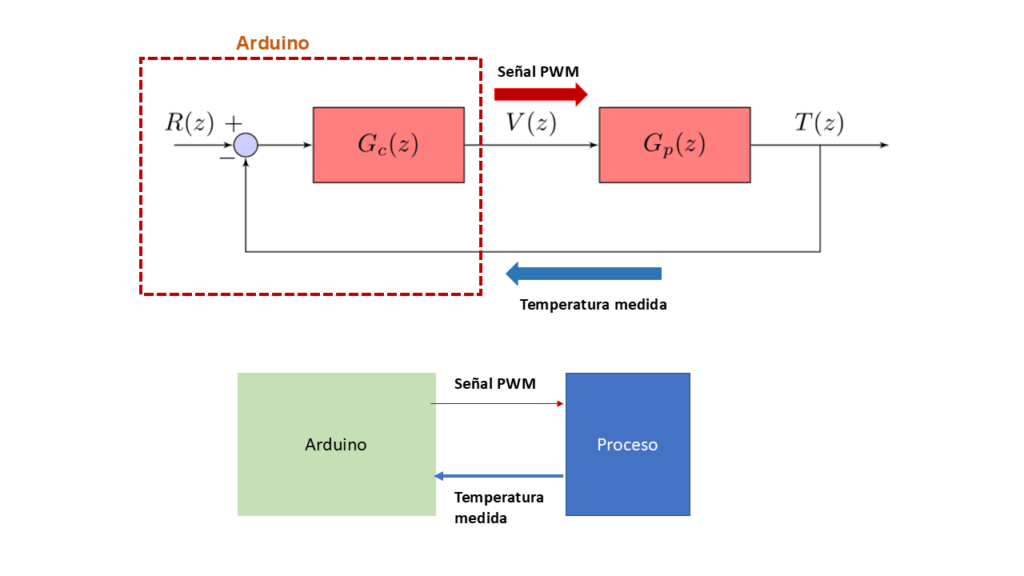
One project I’m particularly proud of is a closed-loop temperature control platform that integrates ARX system identification, digital PI design, discretization, and real-time embedded validation.
It represents a complete engineering cycle: data acquisition, model identification, controller design, discretization, embedded implementation, and experimental verification.
The platform uses an Arduino® Leonardo board to manage real-time sampling, implement the discrete PI algorithm, handle actuator saturation, and log performance data – all while maintaining deterministic timing. It demonstrates how mathematical models become physical, measurable system behavior – which is the essence of control engineering. This workflow reflects how real-world control systems are developed in professional engineering environments.
You can see the full workflow documented on my GitHub, including hardware schematics, firmware implementation, and experimental validation data.
What do you think is ahead for the field of embedded systems?
The future of embedded systems lies in combining classical control rigor with intelligent edge computation.
We will see more real-time intelligence at the edge, stronger integration between data-driven modeling and control design, accessible hardware platforms enabling serious experimentation, and greater alignment between academic training and industrial deployment.
Platforms that allow engineers to prototype, validate, and iterate quickly will shape the next generation of embedded systems.
Building bridges, blurring boundaries
Cristian’s work embodies something we see across the Arduino community: the belief that powerful tools should be accessible. Just check out his projects online: from flotation column control systems to dual-IMU evaluation boards for UAVs, each repository is a complete reference that other engineers can study, reproduce, and build upon.
Have your own Arduino powered engineering projects to share? Post them on Arduino Project Hub or reach out to us at creators@arduino.cc. We love celebrating the community members who are pushing the boundaries of what’s possible with accessible hardware.
The post From theory to hardware: Cristian Castro Lagos on control engineering with Arduino appeared first on Arduino Blog.
Read more here: https://blog.arduino.cc/2026/02/26/from-theory-to-hardware-cristian-castro-lagos-on-control-engineering-with-arduino/