Most people think of blockchain and immediately picture Bitcoin or other digital money. And sure, that’s where it started. But this technology is growing up fast, and its uses go way beyond just finance. Think about how it’s changing how we manage goods, keep health records safe, or even buy property. Blockchain’s ability to create secure, transparent records is opening doors in all sorts of areas we might not expect. Let’s take a look at some of these diverse applications of the blockchain.
Key Takeaways
- Blockchain is more than just cryptocurrency; its applications span numerous industries like supply chain, healthcare, and real estate.
- It offers enhanced security, transparency, and efficiency by removing intermediaries and creating immutable records.
- The technology can secure sensitive data, streamline complex transactions, and improve the integrity of systems.
- Blockchain is being integrated with other technologies like IoT and AI to create new possibilities.
- Future uses include promoting sustainability, verifying ethical sourcing, and driving social impact initiatives.
Revolutionizing Industries: Diverse Applications of the Blockchain
While many people first hear about blockchain through cryptocurrencies like Bitcoin, its actual uses go much, much further. This technology is quietly changing how many different industries operate, making things more secure and efficient. It’s not just about digital money anymore; it’s about building trust and transparency into everyday processes.
Streamlining Supply Chain Management
Think about how complicated it is to track a product from where it’s made all the way to your hands. Blockchain offers a way to create a clear, unchangeable record of every step. This means companies can easily see where a product has been, which helps prevent fake goods from entering the market and makes it faster to find the source of any problems, like contamination in food products. It builds confidence for everyone involved, from the producer to the final buyer. IBM, for example, has been working on blockchain solutions to make these chains work better and be more accountable.
- Provides end-to-end traceability.
- Reduces the risk of counterfeit products.
- Improves accountability across all stages.
This level of detail means that if there’s an issue, pinpointing the exact point of failure becomes much simpler, saving time and resources.
Enhancing Healthcare Data Security
Our health information is incredibly sensitive. Blockchain can act like a super-secure digital vault for patient records. It makes sure that only authorized people can access this data, and it keeps a clear history of any changes. This not only protects privacy but also helps doctors and hospitals share information more effectively when needed, leading to better patient care. It can also simplify the complex administrative tasks within healthcare systems, cutting down on costs and wasted effort. The ability to securely manage and share medical records is a significant step forward for patient data management.
Transforming Real Estate Transactions
Buying or selling property can be a long and complicated process, often involving many different people and lots of paperwork. Blockchain can simplify this significantly. By using smart contracts, which are like digital agreements that automatically execute when certain conditions are met, many parts of a real estate deal can be automated. This includes things like payments and the actual transfer of ownership. It creates a transparent and trustworthy record of who owns what, reducing the chances of fraud and making the whole experience smoother for everyone involved.
Beyond Finance: Blockchain’s Expanding Utility
While many first encounter blockchain through cryptocurrencies like Bitcoin, its capabilities stretch far beyond the financial world. This technology is quietly reshaping how we manage information, protect creations, and conduct business across borders. It’s about more than just digital money; it’s about building trust and transparency into digital processes.
Securing Intellectual Property and Royalties
Protecting creative work and ensuring creators get paid fairly can be a complicated dance. Blockchain offers a way to simplify this. By recording ownership and usage rights on an immutable ledger, it becomes much clearer who owns what and how it’s being used. This can automate royalty payments, making sure artists and inventors receive their due without lengthy administrative processes. Think of it as a digital notary for your creations.
- Immutable Record: Every transaction or licensing agreement is permanently logged.
- Automated Payments: Smart contracts can trigger payments when specific conditions are met.
- Transparency: All parties can see the terms and history of usage.
The ability to track the provenance and usage of digital assets on a blockchain can significantly reduce disputes and streamline the distribution of royalties, benefiting creators across various fields.
Empowering Artists and Content Creators
Beyond just IP, blockchain gives creators more direct control over their work and their audience. Platforms built on blockchain can allow artists to sell their work directly to fans, cutting out intermediaries that often take a large cut. This direct connection can also help build stronger communities around creative projects. It’s a shift towards a more creator-centric economy, where the value generated by content flows more directly to those who make it. This is particularly relevant in the digital art space, where unique digital items can be authenticated and traded securely.
Facilitating International Transactions
Sending money across borders traditionally involves a lot of steps, fees, and waiting times. Blockchain-based systems can make this process much smoother. By enabling direct peer-to-peer transfers, it bypasses many of the traditional banking layers. This means faster settlements and potentially lower costs for individuals and businesses alike. For companies operating globally, this can mean a significant reduction in overhead and improved cash flow management. The Financial Times Group has extensively covered the global financial landscape, and blockchain’s role in cross-border payments is a key development in this area.
- Reduced transaction fees.
- Faster settlement times.
- Increased transparency in fund transfers.
- Potential for new financial products and services.
Strengthening Systems: Blockchain for Governance and Security
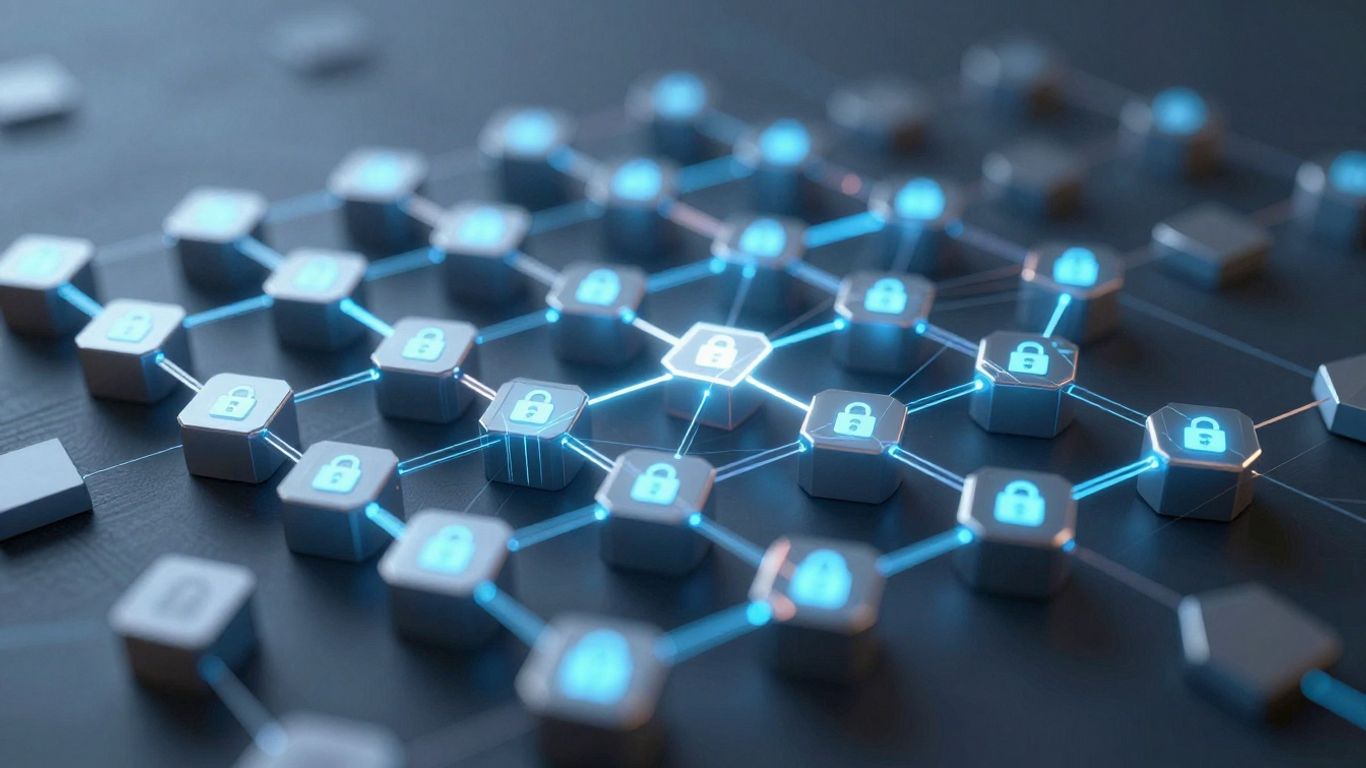
Beyond its financial applications, blockchain technology is proving to be a powerful tool for reinforcing the integrity and security of various systems, particularly in governance and cybersecurity. Its inherent characteristics of transparency, immutability, and decentralization make it well-suited for applications where trust and verifiable records are paramount.
Improving Voting System Integrity
Traditional voting systems often face scrutiny due to concerns about fraud, manipulation, and errors. Blockchain offers a way to create a more secure and transparent electoral process. Each vote can be recorded as a unique, encrypted transaction on a distributed ledger. This ledger is tamper-proof, meaning once a vote is cast and recorded, it cannot be altered or deleted. This provides an auditable trail for every vote, significantly reducing the potential for electoral fraud and increasing public confidence in the results. This technology could fundamentally change how we conduct elections, making them more accessible and trustworthy.
- Secure Recording: Votes are encrypted and timestamped, creating an immutable record.
- Transparency: All participants can verify the integrity of the vote count without compromising voter privacy.
- Auditability: A clear, unchangeable history of all transactions allows for easy verification and auditing.
The decentralized nature of blockchain means no single entity has complete control over the voting process, distributing trust across a network rather than concentrating it in one place.
Enhancing Cybersecurity Measures
In an era where data breaches are a constant threat, blockchain can bolster cybersecurity defenses. Its distributed nature makes it harder for attackers to target a single point of failure. By distributing data across multiple nodes, a breach in one location does not compromise the entire system. Furthermore, blockchain can be used to secure data integrity, ensuring that information has not been tampered with. This is particularly useful for logging critical security events or managing access controls. Organizations are exploring blockchain for advanced encryption and secure data sharing.
Digital Identity and Governance Solutions
Managing digital identities is becoming increasingly complex. Blockchain technology allows for the creation of self-sovereign identities, where individuals have greater control over their personal data. Instead of relying on centralized databases that are vulnerable to hacks, blockchain can store identity attributes in a secure, encrypted format. Users can then grant specific, temporary access to their information as needed, without revealing their entire identity. This approach not only improves privacy but also streamlines processes like Know Your Customer (KYC) verification. In terms of governance, blockchain can facilitate decentralized autonomous organizations (DAOs), enabling transparent and community-driven decision-making processes.
Innovations in Energy and Digital Assets
Beyond just digital money, blockchain is really shaking things up in how we handle energy and all sorts of digital stuff. It’s not just about Bitcoin anymore; this technology is opening doors to new ways of managing resources and ownership.
Decentralizing Energy Distribution
Think about our power grids. Right now, they’re mostly one-way streets, with big companies sending electricity to us. Blockchain can change that by letting us create smaller, more local energy networks. Imagine your neighbor has solar panels and generates more power than they need. With a blockchain system, they could easily sell that extra energy directly to you or others nearby. This makes the whole system more efficient, cuts down on waste, and can even lower costs for everyone involved. It’s about giving more control back to individuals and communities over their energy.
Managing Digital Assets Securely
We’re creating more digital things than ever – art, music, game items, you name it. Blockchain offers a way to keep track of who owns what in a way that’s super secure and transparent. When something is put on the blockchain, it gets a unique digital tag, like a certificate of ownership that can’t be faked or altered. This makes buying, selling, or trading these digital items much safer and clearer. It also means creators can get paid fairly when their work is used or resold, thanks to smart contracts that automatically handle royalties.
Tokenizing Real-World Assets
This is where things get really interesting. Blockchain can take physical things – like a piece of real estate, a valuable painting, or even a share in a company – and represent them as digital tokens. This process, called tokenization, makes it easier to divide ownership of expensive assets into smaller, more affordable pieces. So, instead of needing millions to buy a building, you could buy a token representing a small fraction of it. This opens up investment opportunities to a lot more people and makes trading these assets much quicker and simpler than traditional methods. It’s like turning a big, complicated process into a straightforward digital transaction.
The Synergy of Blockchain with Emerging Technologies

Blockchain isn’t just a standalone innovation; it’s a powerful partner for other cutting-edge technologies. When combined, these advancements can create systems that are more secure, efficient, and intelligent than ever before. Let’s look at how blockchain is working hand-in-hand with some of these exciting new fields.
Integrating Blockchain with the Internet of Things
The Internet of Things (IoT) involves a vast network of devices constantly collecting and sharing data. Think smart thermostats, wearable fitness trackers, or industrial sensors. The sheer volume of data generated can be overwhelming, and keeping it secure is a major challenge. This is where blockchain steps in. By providing a decentralized and tamper-proof ledger, blockchain can securely record and manage all the data coming from these IoT devices. This means we can trust the information these devices provide, leading to more reliable smart homes, more efficient industrial processes, and better-managed smart cities.
- Secure Data Exchange: IoT devices can communicate and share data directly with each other, with transactions recorded on the blockchain.
- Device Authentication: Blockchain can verify the identity of IoT devices, preventing unauthorized access or malicious actors from joining the network.
- Automated Actions: Smart contracts can trigger actions based on data from IoT devices, like automatically ordering more supplies when a sensor indicates low stock.
The combination of blockchain and IoT offers a robust framework for managing the massive amounts of data generated by connected devices, making systems more trustworthy and automated.
Complementing Artificial Intelligence with Blockchain
Artificial Intelligence (AI) is rapidly changing how we analyze information and make decisions. However, AI models are only as good as the data they are trained on. If the data is flawed or tampered with, the AI’s output can be unreliable. Blockchain can help by providing a transparent and immutable record of the data used to train AI models. This ensures that the data is trustworthy and that the AI’s decisions can be traced back to their source. Furthermore, blockchain can facilitate the secure sharing of AI models and datasets, protecting intellectual property while allowing for collaborative development.
- Data Integrity for AI: Blockchain guarantees that the data fed into AI algorithms is accurate and hasn’t been altered.
- Traceable AI Decisions: Every step of an AI’s learning process can be logged on the blockchain, making its conclusions more understandable and accountable.
- Secure Model Sharing: Developers can share AI models and data with confidence, knowing their work is protected.
Enhancing Data Integrity for AI Models
This point is really about making sure AI can be trusted. Imagine an AI system used in healthcare that recommends treatments. If the data it learned from was compromised, the recommendations could be dangerous. Blockchain acts like a digital notary, stamping every piece of data with a verifiable history. This means AI developers and users can be confident that the information powering these intelligent systems is sound. This verifiable data integrity is key to building trust in AI applications across all sectors.
- Auditable Data Trails: Every data point used by an AI can have a clear, unchangeable history recorded on the blockchain.
- Bias Detection: By having transparent data sources, it becomes easier to identify and address potential biases within AI models.
- Secure Data Provenance: Knowing exactly where data came from and how it was processed builds confidence in AI outputs.
Addressing Global Challenges with Blockchain
Blockchain technology isn’t just about digital money; it’s also becoming a tool to tackle some pretty big real-world problems. Think about how we track where our food comes from, or how we can make sure votes are counted fairly. Blockchain offers a way to bring more honesty and clarity to these systems.
Promoting Sustainability and Fair Trade
It’s tough to know if the products we buy are made ethically or sustainably. Blockchain can help by creating a clear record of a product’s journey, from its origin to the store shelf. This means companies can prove they’re sourcing materials responsibly, and consumers can make more informed choices. For example, a coffee farmer could record every step of their process on a blockchain, showing fair wages were paid and sustainable farming methods were used. This information is then available for anyone to see, building trust and encouraging better practices.
- Tracking product origins: Verifying where raw materials come from.
- Monitoring ethical labor: Confirming fair wages and working conditions.
- Verifying environmental impact: Documenting sustainable practices.
This level of transparency can shift markets towards more responsible production, rewarding businesses that prioritize people and the planet.
Ensuring Ethical Sourcing Verification
Related to sustainability, blockchain provides a way to verify that products are sourced ethically. This is especially important in industries where supply chains are complex and prone to issues like child labor or unfair trade. By logging each step of the supply chain on an unchangeable ledger, companies can demonstrate their commitment to ethical sourcing. This not only helps build consumer confidence but also allows businesses to identify and address potential problems within their own operations.
Driving Social Impact Initiatives
Blockchain can also be a powerful force for social good. It can help non-profits and charities operate more transparently, showing donors exactly where their money is going and how it’s being used. This builds trust and can encourage more people to contribute. Furthermore, blockchain can be used to create secure digital identities for people who may not have traditional forms of identification, giving them access to services and opportunities they might otherwise miss. It can also facilitate aid distribution in disaster zones, ensuring that resources reach those who need them most without corruption or delay.
A Future Built on Blockchain
So, we’ve seen that blockchain is way more than just the tech behind cryptocurrencies. It’s a pretty versatile tool that’s already changing how different industries work, making things more secure and straightforward. From keeping track of where your food comes from to making sure medical records are safe, its uses are really expanding. As this technology keeps getting better and more people start using it, we’ll likely see even more creative ways it can help us out. It’s an exciting time to watch how blockchain continues to shape our digital world, moving beyond just digital money into all sorts of practical applications.
Frequently Asked Questions
What is blockchain technology, and how does it work?
Imagine a digital notebook that’s shared among many people. Every time something new happens, like a transaction, it’s written down on a new page. This page is then added to the notebook, and everyone gets an updated copy. Because so many people have a copy, it’s very hard for anyone to secretly change what’s written. This makes it safe and trustworthy, even without a boss in charge.
Besides digital money like Bitcoin, what else can blockchain be used for?
Blockchain is like a super secure way to keep track of things. It can be used to make sure food is safe by tracking it from the farm to your plate, to keep medical records private and safe, or to make buying and selling houses quicker and easier. It’s also great for making sure artists get paid fairly when their music or art is used.
How can blockchain help make voting more secure?
Think about voting. Blockchain could create a system where your vote is recorded securely and can’t be changed. This would make it much harder to cheat or make mistakes, helping everyone trust the election results more. It could even make it easier for people to vote from home.
Can blockchain help with environmental issues or fair trade?
Yes, it can! Blockchain can help prove that products were made in a good way, like making sure workers were treated fairly or that materials weren’t harming the environment. It makes it clear where things come from and how they were made, which is great for businesses that want to be honest and for people who want to buy responsibly.
How does blockchain work with other new technologies like AI or the Internet of Things (IoT)?
Blockchain can make other technologies safer and more reliable. For example, it can help secure the information collected by smart devices (IoT) or make sure the data used to train artificial intelligence (AI) is accurate and hasn’t been tampered with. This helps us trust the results from these advanced technologies.
What are some challenges when using blockchain technology?
One big challenge is making it work fast enough when lots of people are using it at once. Also, different blockchain systems need to be able to talk to each other easily. Plus, governments are still figuring out the best rules for using this technology, which can sometimes slow things down.
The post Beyond Cryptocurrency: Exploring the Diverse Applications of the Blockchain appeared first on IntelligentHQ.
Read more here: https://www.intelligenthq.com/applications-of-the-blockchain/