Information technology, or IT, is a big part of how we do things today, both at work and in our personal lives. It’s about using computers and networks to handle information. Think about everything from sending an email to running a big company’s systems – IT is involved. This article looks at some common information technology examples and how they’re used in different areas.
Key Takeaways
- IT systems help businesses manage and store data securely and efficiently, like a digital library for important information.
- New software applications are developed to meet specific business needs, like mobile apps for customers.
- IT support acts as a ‘tech doctor,’ fixing problems to keep all technology running smoothly.
- Analytics tools help businesses understand data patterns to make smarter decisions.
- Information technology is used everywhere, from managing company operations to simple tasks like using a spreadsheet.
Understanding Core Information Technology Examples
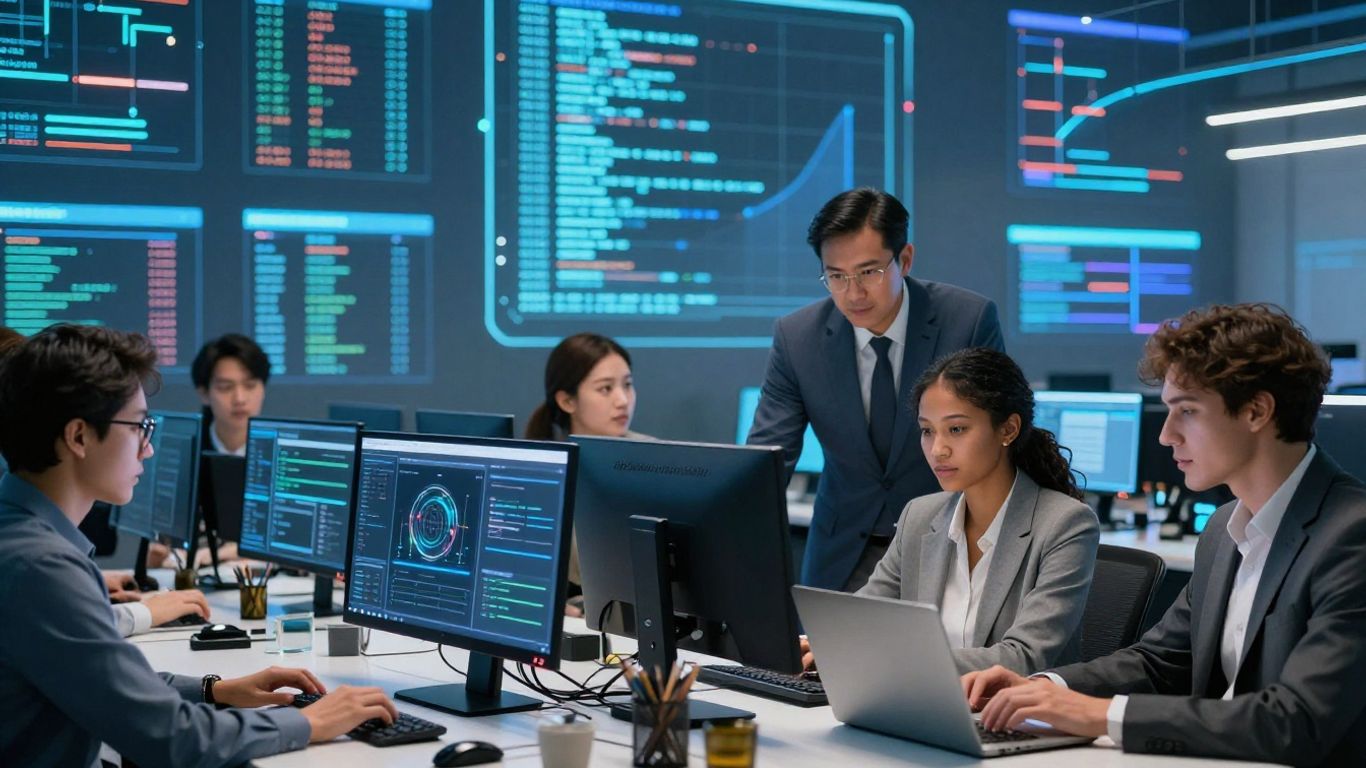
Information Technology, or IT, is all about using computers, software, and networks to handle digital information. Think of it as the engine room of the modern world, making sure data gets created, stored, and moved around smoothly. It’s not just about fancy gadgets; it’s about the systems that keep businesses running and connected.
Server Upgrades and Maintenance
When a business’s servers start getting old and slow, it’s time for an upgrade. This isn’t just swapping out an old box for a new one. The IT team has to carefully plan the whole process. They’ll pick out the new hardware, get it ready, and then, the tricky part: moving all the important applications and data from the old servers to the new ones without any hiccups. It’s a bit like moving house, but with a lot more blinking lights and less packing tape. After the move, they double-check everything to make sure it’s all working perfectly. The old servers are then either repurposed or retired.
Implementing New Software Applications
Businesses often need new tools to do their jobs better. Sometimes, this means developing a brand-new app, like one that lets customers manage their accounts on their phones. Developers work on building this, testing it, and then the operations team gets it ready for everyone to use. This involves putting the app out for download and setting up the behind-the-scenes systems that make it run. It’s a cycle of building, testing, and releasing, often in stages, to make sure the final product is solid.
Ensuring Data Security Through Monitoring
Keeping data safe is a huge part of IT. Companies use special tools to watch what’s happening on their networks and systems all the time. If something looks suspicious, like someone trying to access files they shouldn’t, an alert goes off. The IT team then looks into these alerts, checking logs and reports to figure out what’s going on. They act fast to fix any problems and make changes to stop similar issues from happening again. This constant watchfulness is key to protecting sensitive information and maintaining trust. AI is not replacing knowledge bases but enhancing them. While basic chatbots and simple form builders have been largely replaced or diminished by AI, more complex tools like CRMs are being significantly improved. AI’s role is to augment existing systems, making them more efficient and powerful rather than rendering them obsolete. AI and Machine Learning
Key Information Technology Applications in Business
Information technology is a big part of how businesses run today. It’s not just about computers anymore; it’s about how we use technology to get things done more efficiently and effectively. From keeping track of customers to storing important files, IT plays a central role.
Leveraging Analytics for Informed Decisions
Businesses today collect a lot of data. Think about every sale, every customer interaction, every website visit – it all generates information. Analytics tools help make sense of this data. They can spot trends, predict what customers might want next, and show where a business could improve. This helps leaders make smarter choices instead of just guessing. For example, a company might use sales data to figure out which products are most popular in different regions, or use website traffic data to see which marketing campaigns are working best.
Here’s a look at how analytics can help:
- Understanding Customer Behavior: Spotting patterns in how customers shop and interact.
- Improving Products/Services: Identifying what customers like and dislike to make better offerings.
- Optimizing Marketing: Figuring out the most effective ways to reach potential customers.
- Forecasting Sales: Predicting future sales based on past performance and market trends.
Analyzing data allows businesses to move beyond gut feelings and make decisions based on solid evidence. This can lead to better resource allocation and a stronger competitive position.
Secure and Efficient Data Storage Solutions
Keeping business information safe and accessible is a major IT task. This includes everything from customer records and financial data to product designs and employee information. IT professionals set up systems that protect this data from being lost or accessed by people who shouldn’t see it. They also make sure that the right people can get to the data when they need it, quickly and easily.
Common storage solutions include:
- On-Premise Servers: Physical machines located within the company’s own building.
- Cloud Storage: Using services from companies like Amazon, Microsoft, or Google to store data remotely.
- Hybrid Solutions: A mix of both on-premise and cloud storage.
Providing Essential IT Support Services
Even the best technology can run into problems. When something goes wrong with a computer, a software program, or the network, businesses need help. IT support teams are there to fix these issues. They troubleshoot problems, answer user questions, and help keep everything running smoothly. This support is vital because downtime can cost a business a lot of money and frustrate employees and customers alike. Good IT support means fewer interruptions and a more productive workplace.
The Role of Information Technology in Daily Operations

Information technology, or IT, is woven into the fabric of how businesses run every single day. It’s not just about fancy computers; it’s about the systems that let us talk to each other, manage our work, and keep things running smoothly. Think about it: from sending an email to a colleague across the globe to storing important customer records, IT is the engine behind it all.
Facilitating Global Communication and Collaboration
In today’s connected world, businesses often have teams spread out across different cities, countries, or even continents. IT provides the tools that bridge these distances. Video conferencing platforms allow for face-to-face meetings without the need for travel, while instant messaging and shared document platforms mean everyone can work on the same project simultaneously. This ability to communicate and collaborate effectively, regardless of location, is a huge part of what keeps modern businesses competitive. It means ideas can flow freely and projects can move forward without being held back by geography.
Driving Innovation and Creative Solutions
IT isn’t just about maintaining the status quo; it’s also a major driver of new ideas and better ways of doing things. New software applications can automate repetitive tasks, freeing up employees to focus on more complex problems. Data analytics tools help businesses understand their customers and markets better, leading to smarter product development and marketing strategies. The constant evolution of technology means there are always new possibilities for improving efficiency and creating unique solutions.
Supporting Critical Business Functions
Many core business activities simply wouldn’t be possible without IT. Consider these examples:
- Sales and Customer Management: Customer relationship management (CRM) systems track interactions, manage sales pipelines, and help build stronger customer relationships.
- Financial Operations: Accounting software and systems handle everything from invoicing and payroll to complex financial analysis and reporting.
- Human Resources: IT systems manage employee data, track time off, and streamline the hiring process.
Without robust IT infrastructure, these fundamental operations would grind to a halt, impacting everything from revenue generation to employee satisfaction. The reliability and efficiency of these systems are paramount for any organization’s success.
IT systems also play a role in keeping operations secure. For instance, monitoring tools can detect unusual activity on a network, alerting IT staff to potential security breaches before they cause significant damage. This proactive approach is vital for protecting sensitive company and customer data.
Exploring Diverse Information Technology Systems
Information technology is a vast field, and understanding its various systems is key to appreciating its impact. These systems work together, forming the backbone of our digital world. Let’s take a look at some of the major players.
Internet and Web Technologies
The internet is perhaps the most recognizable IT system. It’s the global network that connects billions of devices, allowing for the exchange of information. Web technologies are the tools and protocols that make this possible, from the websites we visit daily to the underlying infrastructure that keeps everything running. Think of it as the digital highway system for data. Without these technologies, accessing information or communicating online would be impossible. It’s amazing how far we’ve come from the early days of dial-up connections to the high-speed access we have today, enabling things like streaming services.
Cloud Computing Services
Cloud computing has revolutionized how we store and access data and applications. Instead of relying solely on local hardware, cloud services allow us to use resources over the internet. This means data can be accessed from anywhere, on any device, with an internet connection. It’s like having a massive, remote hard drive and processing power available on demand. This flexibility is a game-changer for businesses of all sizes.
Database Management Systems
Databases are organized collections of data. Database Management Systems (DBMS) are the software that allows us to create, manage, and interact with these databases. They are essential for storing and retrieving information efficiently and securely. Imagine a library where books are meticulously cataloged and easy to find; a DBMS does something similar for digital information. They are critical for everything from customer records to inventory management.
Artificial Intelligence and Machine Learning
Artificial Intelligence (AI) and Machine Learning (ML) are rapidly transforming IT. AI refers to systems that can perform tasks typically requiring human intelligence, like problem-solving or decision-making. Machine learning is a subset of AI where systems learn from data without being explicitly programmed. These technologies are behind many of the smart features we use daily, from personalized recommendations to advanced analytics. They are constantly evolving, pushing the boundaries of what’s possible with technology.
Here’s a quick look at how these systems interact:
- Internet & Web: Provides the connection and interface for users.
- Cloud Computing: Offers scalable infrastructure and storage.
- Databases: Organizes and stores the information being processed.
- AI/ML: Analyzes data and automates complex tasks.
The interconnectedness of these systems means that advancements in one area often lead to progress in others, creating a dynamic and ever-evolving technological landscape. It’s a continuous cycle of innovation and application.
Essential Information Technology Functions
Cybersecurity Measures and Best Practices
In today’s connected world, protecting digital assets is a top priority. Cybersecurity involves a set of practices and tools designed to safeguard computer systems, networks, and data from theft, damage, or unauthorized access. This isn’t just about installing antivirus software; it’s a layered approach. Think of it like securing your home – you have locks on the doors, maybe an alarm system, and you’re careful about who you let in. In IT, this translates to firewalls, intrusion detection systems, regular security audits, and educating users about safe online habits.
The goal is to prevent breaches before they happen and to have a plan if they do.
Here are some key aspects of cybersecurity:
- Access Control: Making sure only authorized individuals can access specific data or systems.
- Data Encryption: Scrambling data so it’s unreadable to anyone without the correct key.
- Vulnerability Management: Regularly scanning for and fixing weaknesses in systems.
- Incident Response: Having a clear plan for what to do if a security incident occurs.
Internet of Things (IoT) Integration
The Internet of Things, or IoT, refers to the network of physical devices – “things” – embedded with sensors, software, and other technologies that allow them to connect and exchange data with other devices and systems over the internet. You probably interact with IoT daily, perhaps without even realizing it. Your smart thermostat that adjusts the temperature based on your schedule, or a fitness tracker that monitors your steps, are common examples. In a business context, IoT can be used to monitor equipment performance in a factory, track inventory in a warehouse, or even manage energy consumption in a large building. This interconnectedness allows for greater automation and data collection, leading to new insights and efficiencies.
IT Governance and Policy Development
IT governance is the framework that ensures an organization’s IT investments support its business objectives. It’s about making sure that technology is used effectively, responsibly, and in alignment with the company’s overall strategy. This involves creating clear policies and procedures for how IT resources are managed, used, and secured. Think of it as the rulebook for how technology operates within a company. This includes policies on:
- Data privacy and handling.
- Acceptable use of company devices and networks.
- Software licensing and procurement.
- Disaster recovery and business continuity.
Well-defined IT governance helps prevent misuse, reduces risks, and makes sure that technology spending is aligned with what the business needs to achieve. It provides structure and direction for all IT-related activities.
Information Technology’s Impact on Modern Life
It’s hard to imagine a day without interacting with information technology (IT) in some way. From the moment we wake up and check our phones to the way we work, learn, and connect with others, IT is woven into the fabric of our daily existence. It’s not just about fancy gadgets; it’s about the systems and tools that make so much of our modern world possible.
Enabling Access to Information and Knowledge
One of the most profound impacts of IT is how it has democratized access to information. Gone are the days when knowledge was confined to libraries or exclusive institutions. Today, with an internet connection, we can explore vast online libraries, research complex topics, and stay updated on global events in real-time. This accessibility is a game-changer for personal growth and informed decision-making.
- Vast Digital Libraries: Access to millions of books, articles, and research papers.
- Real-time News and Updates: Staying informed about current events from diverse sources.
- Online Learning Platforms: Opportunities for continuous education and skill development.
The ability to quickly find and process information has fundamentally changed how we approach problems and learn new things. It’s like having a global brain at our fingertips, ready to assist with almost any query.
Enhancing Education and Research Opportunities
IT has revolutionized how we teach and learn. Remote learning technologies allow students to access education regardless of their location, breaking down geographical barriers. Researchers benefit from powerful tools for data analysis, collaboration, and sharing findings, accelerating the pace of discovery. Think about how much easier it is now to collaborate on a research paper with someone across the globe, sharing data and insights instantly.
Driving Cost Savings Through Digitalization
Businesses and individuals alike have seen significant cost reductions thanks to IT. Automating repetitive tasks, moving from paper-based systems to digital ones, and optimizing resource management all contribute to greater efficiency and lower expenses. For instance, managing inventory digitally can prevent overstocking and reduce waste, saving money and resources. This shift also helps in managing daily tasks more effectively.
| Area of Savings | Example | Estimated Impact |
|---|---|---|
| Operational Costs | Reduced paper, printing, and storage | Significant reduction in office supplies and physical space needs |
| Labor Costs | Automation of routine processes | Frees up human resources for more complex tasks |
| Communication | Digital collaboration tools | Lower travel expenses and faster information exchange |
Wrapping Up Our IT Exploration
So, we’ve looked at how information technology touches pretty much everything we do, from upgrading servers behind the scenes to the apps on our phones. It’s not just about fancy gadgets; it’s about making things work better, keeping our information safe, and helping businesses make smarter choices. As technology keeps changing, IT will keep finding new ways to help us connect, create, and get things done. It’s a field that’s always moving, and it’s pretty amazing to see how it shapes our world, both at work and in our personal lives.
Frequently Asked Questions
What is Information Technology in simple terms?
Information Technology, or IT, is basically using computers and other technology to help us do things with information. Think of it like using tools to create, store, share, and manage digital stuff, like documents, pictures, or videos.
Can you give some everyday examples of IT?
Sure! When you use your smartphone to send a text, watch a video online, or play a game, you’re using IT. Businesses use IT for things like keeping customer information safe, sending emails, or running their websites.
How does IT help businesses work better?
IT helps businesses in many ways. It makes it easier to talk to customers and employees, keeps important company information safe, and helps them understand customer needs better by looking at data. It also helps them do tasks faster and more efficiently.
What are some types of IT systems?
There are many types of IT systems. Some common ones include the internet and websites we use every day, cloud computing which lets us store files online, and databases that organize lots of information. Also, things like artificial intelligence (AI) are becoming a big part of IT.
Why is IT security important?
IT security is super important because it protects our digital information from being stolen or misused. It’s like locking your house to keep your belongings safe. For businesses, it means keeping customer data private and preventing cyberattacks.
How does IT make our lives easier?
IT makes our lives easier by giving us quick access to tons of information, like news or learning materials online. It also helps us connect with people all over the world easily and can even save businesses money by making processes faster and more automated.
The post Exploring the World of Information Technology: Key Examples and Applications appeared first on IntelligentHQ.
Read more here: https://www.intelligenthq.com/information-technology-examples-2/