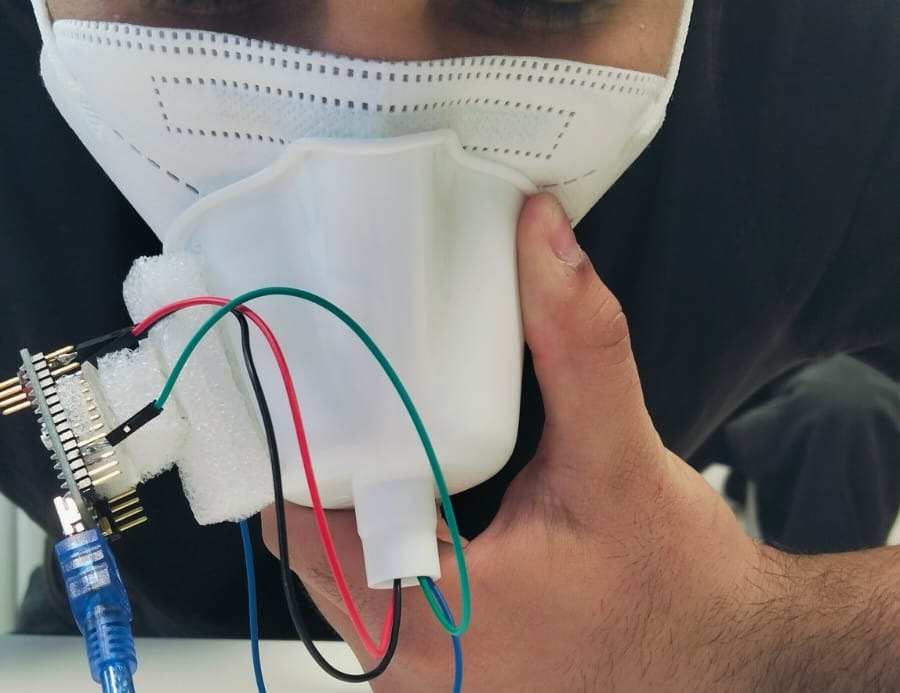
What if your students could build a working biomedical prototype from scratch – one that explains human digestion, gas diffusion, sensor calibration, and programming all at once? That’s exactly what happened at ITTS “E. Divini” in San Severino Marche, Italy, where Professor Lorenzo Morresi and his colleagues Professors Battistini and Capri led a group of fifth-year chemistry and materials students – Noemi Aloi, Corrado Avellino, Michele Bagoi, Alessandro Fiorani, Priya Kaur, and Matteo Zagaglia – to prototype a hydrogen breath test system using an Arduino Nano board. The project was featured in Italy’s Focus Scuola magazine and is a great example of what’s possible when curiosity meets the right tools.
The science behind the idea
Lactose intolerance isn’t a disease – it’s a condition caused by a deficiency of lactase, the enzyme that breaks down lactose into glucose and galactose in the small intestine. When lactase is absent or insufficient, undigested lactose reaches the colon, where gut bacteria ferment it and produce gases, including hydrogen (H?). That hydrogen passes into the bloodstream and is eventually exhaled through the lungs.
This is the principle behind the hydrogen breath test, a diagnostic method used in clinical settings: measuring the concentration of hydrogen in exhaled breath after ingesting lactose can help to detect malabsorption. The project team saw this as a perfect intersection of biochemistry, physics, and electronics – and decided to build it.
The hardware: simple, accessible, effective
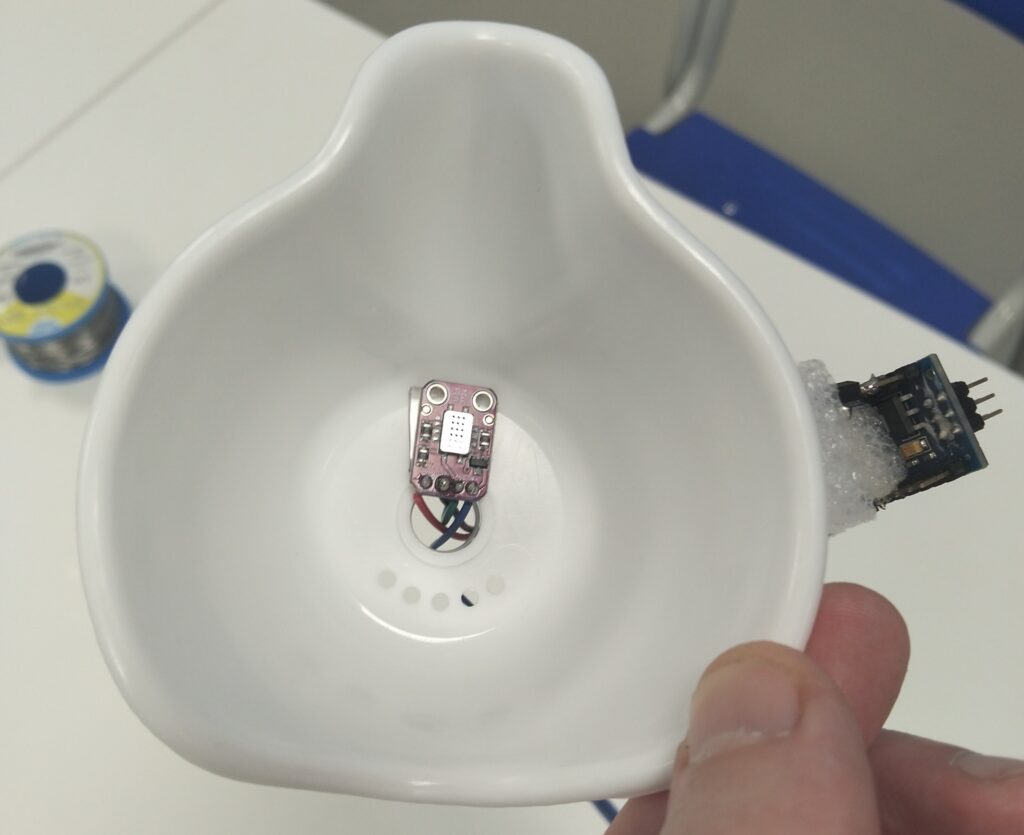
The prototype uses three main components. A simple Nano board serves as the brain of the system, programmed in the Arduino language (based on C++) to handle sensor input and data output. A MiCS-5524 gas sensor – sensitive to reducing gases including hydrogen – handles detection across a range of 1 to 1,000 ppm. And to make the device practical to use, the sensor was integrated into a stan
dard aerosol mask, so exhaled breath hits the sensitive element directly. The choice of components was deliberate: accessible, affordable, and replicable by any school with a basic electronics lab.
Calibration, protocol, and the scientific method
The team didn’t stop at assembly. Without access to certified gas cylinders for calibration, students worked from the manufacturer’s logarithmic curves to translate raw electrical signals into hydrogen concentrations expressed in parts per million – a real exercise in dealing with the kind of uncertainty and approximation that comes with actual scientific work.
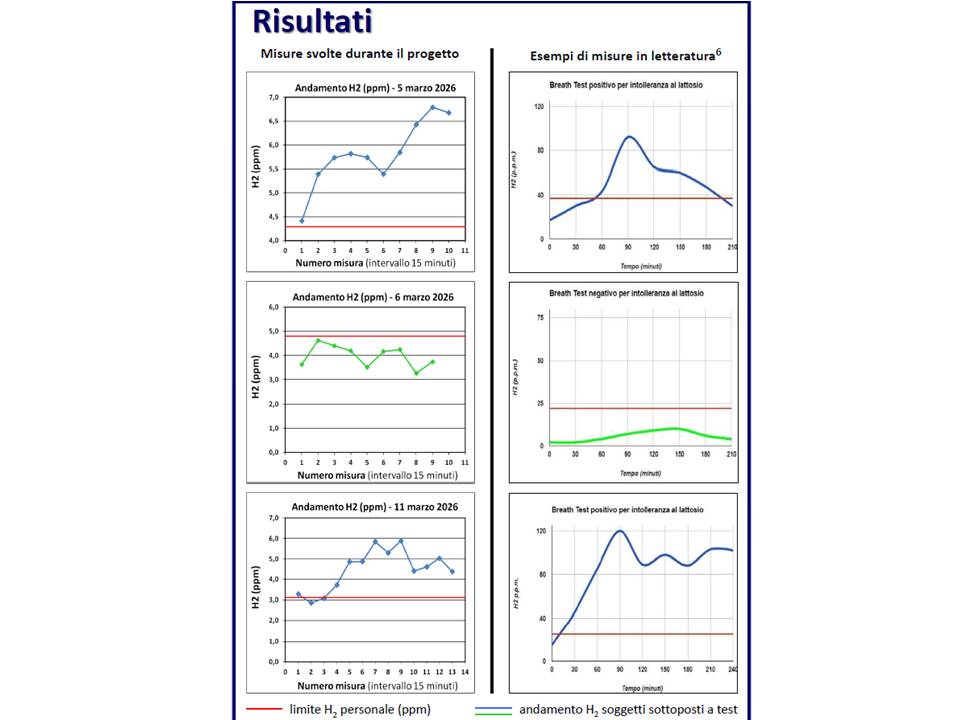
Test subjects followed a rigorous protocol: 12 hours of fasting, a baseline measurement, a low-residue diet the day prior, ingestion of milk, and breath measurements every 15 minutes for two hours. Data was then processed in Microsoft Excel to visualize the hydrogen curve over time – and the resulting graphs clearly resembled the hydrogen peaks characteristic of a breath test.
A powerful teaching tool, not a medical device
The team is clear about what the prototype is and isn’t. As Professor Morresi puts it, “We demonstrated the feasibility of our idea and its reproducibility by others. This is not a medical device – but it is a powerful teaching tool that brings together coding, physics, and health in a single lab activity.”
The project covers an impressive spread of curriculum topics in one hands-on experience: the physics of gas diffusion through the circulatory system, the biochemistry of enzyme function and fermentation, analog signal processing with a microcontroller, and the analysis of measurement uncertainty. Future iterations of the project aim to add methane (CH?) detection, which would make the results even more diagnostically meaningful.
Open and replicable – by design
One of the most generous aspects of this project is that Professor Morresi has made everything available to other schools: lab worksheets, Arduino code, sensor calibration data, and test protocols. The goal is straightforward – to show that in a technical high school, with good guidance and affordable components, students can turn ideas into working technology, and subjects like physics and chemistry stop being abstract concepts and start being tools for understanding the world.
If you’re a teacher looking to bring a genuinely interdisciplinary project into your classroom – one that connects biochemistry, physics, electronics, and data analysis in a way students can actually build – this one is worth exploring! All project materials are available on Professor Morresi’s dedicated project page (in Italian).
Arduino and Nano are trademarks or registered trademarks of Arduino S.r.l.
The post Students build a lactose intolerance breath tester with Arduino® Nano™ board appeared first on Arduino Blog.
Read more here: https://blog.arduino.cc/2026/05/06/students-build-a-lactose-intolerance-breath-tester-with-arduino-nano-board/