Blockchain technology is often talked about because of Bitcoin, but it does so much more. It’s a system for recording information that’s really hard to change, hack, or mess with. Think of it like a shared digital notebook that many computers have a copy of. This makes it very open and safe. This article looks at some of the many ways this technology is being used today, showing how it’s helping different industries beyond just finance. We’ll explore various use cases for blockchain.
Key Takeaways
- Blockchain provides clear tracking and records in supply chains, helping to identify products and reduce fake items.
- Patient health information can be managed more securely and privately using blockchain, giving patients more control.
- Digital identification and customer verification processes can become safer and quicker with blockchain.
- Blockchain can speed up international money transfers and help with following money rules automatically.
- Creators can use blockchain to protect their work and get paid royalties automatically through its clear records and smart contracts.
Revolutionizing Financial Services With Blockchain
Decentralised Finance (DeFi) Innovations
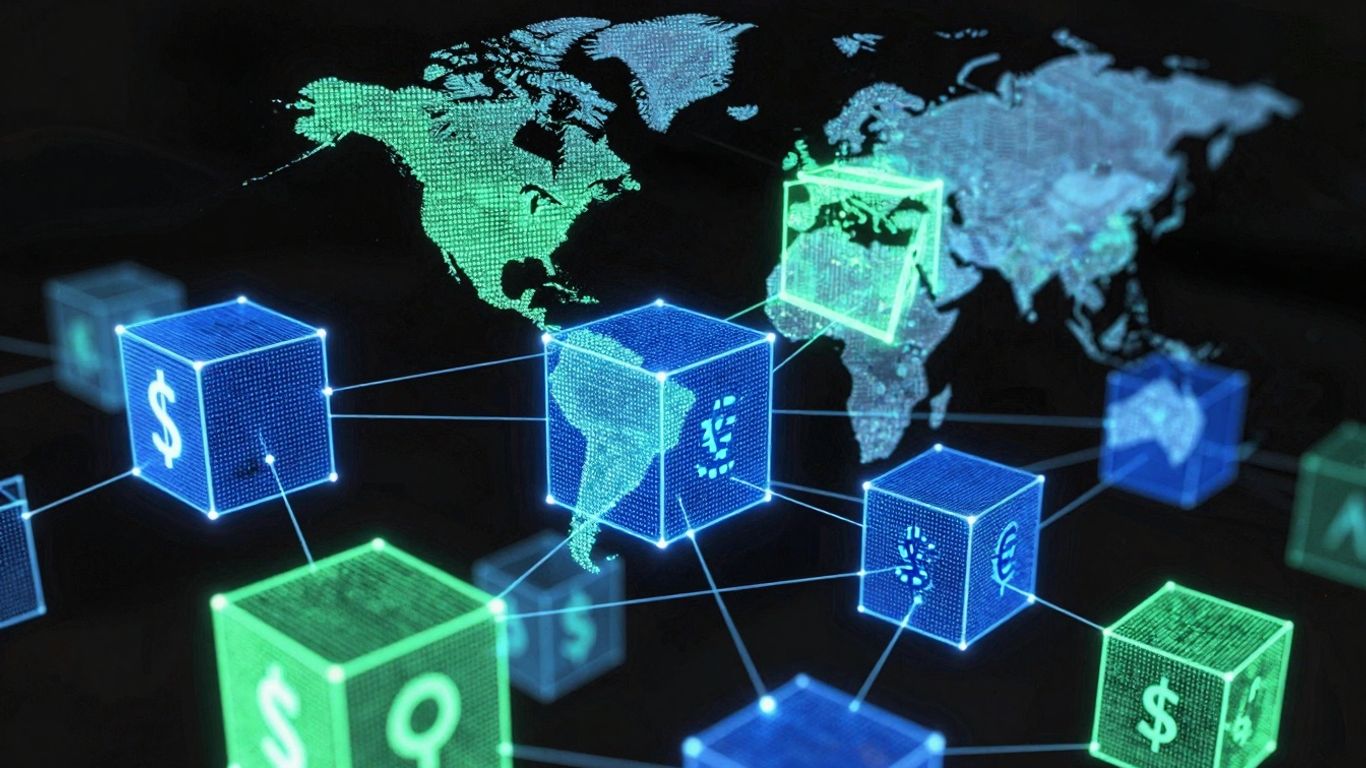
When you hear “blockchain,” it’s easy to think only of Bitcoin or other digital coins. But the technology is doing much more, especially in finance. It’s quietly changing how we handle money, credit, and even the paperwork involved in financial dealings, often making things quicker and more straightforward. Decentralized Finance, or DeFi, is a big part of this shift. Blockchain platforms are making it possible for people to lend and borrow directly from each other, bypassing traditional banks. This can lead to better interest rates for everyone involved and more ways to fund projects. Crowdfunding also gets a boost, as platforms can use blockchain to manage contributions and share profits more openly.
Streamlining Transactions Beyond Cryptocurrency
Sending money across countries used to be a real headache. You’d deal with multiple banks, currency conversions, and fees at every turn. Blockchain offers a different way. It lets people send value directly to each other, anywhere in the world, without needing a bunch of middlemen. This means transactions can be finalized faster and with fewer charges. It’s like skipping the toll booths on a highway. This ability to move value globally with greater speed and lower cost is a significant shift, opening up new possibilities for individuals and businesses alike.
| Benefit | Description |
|---|---|
| Reduced Fees | Cutting out intermediaries lowers the costs associated with transfers. |
| Faster Settlement | Transactions can be confirmed and settled in minutes or hours, not days. |
| Increased Accessibility | Provides financial services to people without access to traditional banks. |
Enhancing Security and Efficiency in Fintech
Keeping up with financial rules, like “Know Your Customer” (KYC) and “Anti-Money Laundering” (AML) requirements, is a big job for financial companies. Blockchain can help automate many of these tasks. By creating secure, verifiable digital identities and recording transactions in a way that can’t be changed, compliance checks can become more efficient and less likely to have mistakes. This not only saves companies time and money but also makes the accuracy of these checks better. This technology allows for the creation of tamper-proof, verifiable digital identities that individuals can manage.
Think of blockchain as a super secure digital vault for your identity. Instead of relying on a single company to vouch for you, blockchain lets you create and manage your own digital credentials. These are like digital certificates that prove who you are or that you have certain qualifications. When you need to prove something, you can share just the specific credential needed, without revealing more personal information than necessary.
Transforming Supply Chain Management
Think about the journey your products take before they reach you. It’s often a complex web of manufacturers, distributors, and retailers. Keeping track of everything can be a real challenge, leading to confusion, delays, and sometimes, even counterfeit goods slipping through. This is where blockchain technology steps in, offering a way to make these processes much clearer and more reliable.
Ensuring End-to-End Traceability
Blockchain provides a shared, unchangeable record of every step a product takes. Imagine a digital passport for every item. From the moment raw materials are sourced to when the final product is delivered, each transaction and movement is logged on the blockchain. This creates a complete history that everyone involved can see, but no one can alter. This level of visibility helps identify bottlenecks and ensures that products are handled correctly along the way. It’s like having a live map of your goods’ entire journey, making it easier to manage inventory and predict delivery times. This transparency is a game-changer for industries where knowing the origin and handling of goods is critical, such as in food safety.
Combating Counterfeiting With Immutable Records
Counterfeit products are a huge problem, costing businesses and potentially harming consumers. Blockchain’s immutable ledger is a powerful tool against this. By assigning a unique digital identity to each item, it becomes incredibly difficult for fake goods to enter the supply chain unnoticed. Consumers can often scan a QR code to verify a product’s authenticity and trace its history, building confidence and protecting both brands and buyers. This is especially important for high-value items or pharmaceuticals where authenticity is paramount.
Improving Accountability From Production To Delivery
When every action is recorded on a blockchain, accountability naturally increases. If a problem arises, it’s much easier to pinpoint where it happened. Was it during manufacturing? Shipping? Storage? The blockchain record provides clear answers, helping companies improve their processes and prevent future issues. This also means that suppliers and partners can be held more accountable for their roles in the supply chain. It encourages better practices across the board, leading to a more efficient and trustworthy system for everyone involved.
The ability to create a verifiable and tamper-proof history for goods means that trust can be built directly into the supply chain itself, reducing the need for constant checks and audits.
Enhancing Healthcare Through Blockchain
The healthcare industry is awash in data, from patient charts and diagnostic images to research findings and wearable device outputs. Traditionally, managing this vast amount of sensitive information securely and efficiently has been a significant challenge. Systems often struggle to communicate with each other, making it difficult to share information safely or for patients to truly control their own health details. Blockchain technology offers a new way to handle this sensitive information.
Securing Patient Data and Medical Records
Think of a blockchain as a shared digital ledger that is distributed across many computers. Once information is added, it’s cryptographically linked to the previous entry, creating a chain. This makes it extremely difficult for anyone to alter or delete records without leaving a clear, undeniable trace. Because this data isn’t stored in one central location but is spread out, it’s much harder for unauthorized individuals to access or tamper with. This distributed nature significantly boosts security.
Improving Interoperability Between Providers
Getting a complete picture of a patient’s health can be complicated when their records are scattered across different hospitals, clinics, and labs. Blockchain can act as a bridge between these disparate systems. By establishing a standardized, secure method for accessing and sharing data, it helps various healthcare systems communicate more effectively. This means doctors can access a more comprehensive view of a patient’s history, which can lead to more accurate diagnoses and better-tailored treatment plans. It helps break down the silos between different data systems, making sure the right information reaches the right person when it’s needed.
Streamlining Administrative Processes
Blockchain can also simplify the behind-the-scenes work in healthcare. Imagine a system where patient consent for data sharing is automatically recorded and verified. This could speed up processes like getting referrals approved or sharing information with insurance companies. Smart contracts, which are like self-executing agreements on the blockchain, can automate many of these tasks. This means less manual effort, fewer mistakes, and potentially lower costs for everyone involved. Patients can also gain more control over who sees their information and for how long, simply by managing permissions through their digital identity, much like they might manage digital assets.
Patient-centric data management not only respects privacy but also builds greater trust between individuals and the healthcare systems that serve them.
Here’s a look at how patients can manage their data:
- Granting Access: Patients can give specific healthcare providers permission to view their medical history.
- Revoking Access: These permissions can be taken back at any time, giving patients ongoing control.
- Data Sharing: Records can be securely shared with specialists or for research purposes with explicit consent.
Blockchain Applications in Real Estate
Buying or selling property can feel like a maze of paperwork and waiting. Blockchain technology is stepping in to simplify this whole process, making it more secure and efficient for everyone involved. Think of it as a digital upgrade for how we handle property.
Simplifying Property Ownership Records
Traditionally, property records are kept on paper, often in local government offices. This method is slow, prone to errors, and can even lead to fraud. Blockchain offers a way to create digital, tamper-proof records of who owns what. Each property’s title and deed can be recorded on a distributed ledger, creating a clear and permanent history of ownership. This means less chance of disputes and a much easier way to verify ownership. It’s a big step towards making property records more reliable and accessible.
Automating Transactions With Smart Contracts
When you buy property, there’s usually an escrow process to hold funds until all conditions are met. Blockchain can automate this using smart contracts. These are self-executing agreements where the terms are written into code. For example, a smart contract could automatically release funds from escrow once the property title is officially transferred on the blockchain. This speeds things up, reduces the need for intermediaries, and cuts down on the potential for mistakes or delays. It brings a new level of trust and speed to property deals.
Increasing Trust and Reducing Fraud
Blockchain also opens doors to new ways of investing in real estate. Through a process called tokenization, a property can be divided into digital tokens. Each token represents a share of ownership. This allows multiple people to invest in a property, even with smaller amounts of money. It makes real estate investment more accessible to a wider range of people and can increase the liquidity of property assets, meaning they can be bought and sold more easily. This innovation could change how people think about property ownership and investment opportunities, making it more like trading stocks. The shift towards digital property records and automated transactions promises to reduce administrative burdens, minimize processing times, and significantly lower the risk of fraud and disputes in real estate dealings.
The real estate sector often deals with complex legalities and numerous intermediaries. Blockchain’s ability to create a single, unchangeable source of truth for property ownership and transaction history can significantly cut down on the time, cost, and potential for errors associated with traditional methods.
The Synergy of Blockchain With Emerging Technologies
Securing the Internet of Things (IoT)
Think about all the devices connected to the internet today – your smart fridge, your car, even your thermostat. That’s the Internet of Things, or IoT. These devices generate a ton of data, and keeping that data safe and accurate is a big challenge. Blockchain can step in here. By using blockchain, we can create a secure and shared record for all that IoT data. This means the information is more reliable and harder to mess with. It’s like giving each device its own secure digital ID and a trustworthy way to communicate.
Enhancing Artificial Intelligence (AI) Integrity
Artificial Intelligence is getting smarter all the time, but how do we know the data it learns from is good? Blockchain can help make sure AI systems are built on solid ground. It provides a transparent way to track the data used to train AI models. This means we can trust the decisions AI makes more, because we can see where the information came from. It also helps protect the clever ideas behind AI models, so they don’t get copied easily.
Bolstering Cybersecurity Measures
Cybersecurity is a constant battle, and blockchain offers some powerful new tools. Because blockchain is spread out across many computers, there’s no single weak spot for hackers to target. It also makes data very hard to change without anyone noticing. This makes it great for protecting sensitive information, like financial records or personal health data. Plus, blockchain can make verifying who someone is much more secure, cutting down on fake identities and unauthorized access.
The combination of blockchain with other advanced technologies isn’t just about making things more secure; it’s about building a more trustworthy digital future. When these technologies work together, they can create systems that are more reliable, transparent, and efficient than ever before.
Real-World Blockchain Case Studies
While the concept of blockchain technology might still feel a bit abstract, many organizations are already putting it to work in practical ways. It’s not just about digital money anymore; blockchain is proving its worth in making complex systems more transparent and reliable. Let’s look at a few examples that show how this technology is moving beyond theory and into action.
IBM Food Trust: Transparency in the Food Industry
Imagine trying to track a head of lettuce from the farm all the way to your dinner plate. It sounds simple, but in reality, the food supply chain is incredibly complex, with many hands involved. IBM Food Trust uses blockchain to create a shared, immutable record of where food comes from and where it’s been. This means everyone in the chain – farmers, distributors, retailers – can access the same information. This level of transparency helps quickly identify the source of contamination during outbreaks and reduces food waste. It also makes it harder for counterfeit products to enter the market.
Estonia’s e-Residency: Digital Identity and Governance
Estonia has taken a bold step into the digital age with its e-Residency program. This initiative allows people from anywhere in the world to establish and run an EU-based company online. Blockchain technology underpins this by providing a secure and verifiable digital identity for each e-resident. This system streamlines the process of setting up and managing businesses, cutting through a lot of the traditional red tape. It’s a fascinating look at how blockchain can support digital governance and make international business more accessible.
MediLedger: Securing the Pharmaceutical Supply Chain
The pharmaceutical industry faces significant challenges with counterfeit drugs and ensuring the integrity of the supply chain. The MediLedger network is a consortium that uses blockchain to track prescription medicines from the manufacturer to the pharmacy. By creating a secure and transparent ledger, it helps verify the authenticity of drugs and prevents fake medications from reaching patients. This not only protects public health but also improves efficiency for all parties involved in the drug distribution process. It’s a critical application that highlights blockchain’s role in safeguarding sensitive industries.
Addressing Challenges and Considerations for Blockchain Adoption
While blockchain technology presents exciting possibilities, it’s not without its hurdles. Getting this tech to work smoothly in the real world involves tackling a few key areas. It’s like building a complex machine; every part needs to fit just right.
Navigating Scalability and Interoperability
One of the biggest conversations around blockchain is how it handles a lot of activity. Imagine a popular highway during rush hour – things can slow down. As more people use a blockchain network, the system needs to process more transactions. This is where scalability comes in. Developers are working on solutions like sharding, which splits the network into smaller pieces, and off-chain transactions, which handle some activity away from the main chain. The goal is to keep things moving fast without sacrificing security.
Then there’s interoperability. Think of it as getting different computer programs to talk to each other. Right now, many blockchains are like separate islands. For blockchain to really connect different systems and industries, these islands need bridges. Making different blockchain networks, and even connecting them to older, existing systems, is a major focus. This will allow data and value to flow more freely between them, opening up new possibilities.
Understanding The Evolving Regulatory Landscape
The rules for blockchain and digital assets are still being written. Governments around the world are figuring out how to approach things like digital currencies, data privacy on the blockchain, and overall security. Some places are embracing new ideas, while others are taking a more cautious approach. Having clear, sensible regulations is important. It helps businesses know what to expect and encourages responsible innovation. Without this clarity, it can be tough for companies to invest and build new things on blockchain technology. This evolving regulatory landscape is something everyone in the space is watching closely.
Promoting Sustainability and Social Impact
There’s also the question of how much energy some blockchain systems use, especially those that rely on ‘proof-of-work’ like Bitcoin. This has led to a push for more energy-efficient alternatives, like ‘proof-of-stake’. Beyond energy, we need to think about how blockchain can be used for good. Can it help with fair elections? Can it improve access to financial services for people who are currently left out? These are important social questions that go beyond just the technology itself.
The journey of adopting blockchain technology requires careful planning and a willingness to adapt. Addressing these challenges head-on will pave the way for more widespread and beneficial applications.
Looking Ahead: The Expanding World of Blockchain
So, we’ve seen that blockchain is way more than just Bitcoin. It’s a really interesting technology that’s already changing how different industries work, from keeping track of food in the supply chain to making sure your health records are safe. It’s all about making things more open, secure, and easier to trust. While there are still some hurdles to clear, like making it work for even more people and figuring out the rules, the possibilities are pretty exciting. As this tech keeps growing and gets combined with other new tools, we’ll likely see even more clever ways it can help us out. It’s definitely a space worth keeping an eye on as it continues to shape our digital future.
Frequently Asked Questions
What exactly is blockchain technology, and how is it different from Bitcoin?
Think of blockchain as a super secure digital notebook that’s shared among many computers. Every time something new happens, like a record being added, it’s like writing a new page in the notebook. This page is then linked to the previous one, creating a chain of pages (blocks). Because it’s shared and very hard to change once written, it’s trustworthy. Bitcoin uses this technology to keep track of who owns what digital money, but blockchain can be used for many other things besides just digital money, like tracking products or keeping important records safe.
How can blockchain help make sure products are real and not fake?
Imagine you buy a special pair of sneakers. Blockchain can create a digital history for those sneakers, showing exactly where they were made, when they were shipped, and how they got to the store. Because this history is very hard to fake or change, you can be more sure that the sneakers are the real deal and not copies. This helps companies stop fake products from being sold.
Can blockchain really make healthcare better and safer?
Yes, it can! Your health information is very private. Blockchain can help keep this information safe and secure, making sure only the right doctors or you can see it. It can also help different hospitals or clinics share your health records more easily and safely when needed, so you get the best care possible without your private details getting lost or misused.
How does blockchain help with sending money to other countries?
Sending money overseas can be slow and cost a lot because of many middlemen. Blockchain lets people send money directly to each other, like sending a message. This can be much faster and cheaper. It’s like having a global digital post office for money that doesn’t need lots of stops along the way.
What is ‘digital identity,’ and how does blockchain help with it?
Your digital identity is like your online ID card – it proves who you are. Blockchain can help create and manage this digital identity in a very secure way. It means you can prove who you are online without having to share lots of personal information every time, making things safer and easier.
What are some of the biggest challenges when using blockchain technology?
Even though blockchain is powerful, it faces some hurdles. One big issue is making it work fast enough when lots of people are using it at the same time – this is called scalability. Another challenge is getting different blockchain systems to talk to each other and to older computer systems. Also, rules and laws about blockchain are still being figured out by governments, which can make it tricky for businesses to know exactly how to use it.
The post Beyond Bitcoin: Exploring Diverse Use Cases for Blockchain Technology appeared first on IntelligentHQ.
Read more here: https://www.intelligenthq.com/use-cases-for-blockchain-2/