The world of technology is moving fast, and 2026 is shaping up to be a big year for new gadgets and ideas. We’re seeing changes that will affect how we live and work. From smart computers to cities that think for themselves, these top 10 technology trends are definitely worth paying attention to. Let’s look at what’s coming and how it might change things.
Key Takeaways
- Artificial Intelligence is becoming a bigger part of our daily lives, helping with tasks and making things more personal.
- Smart Cities will use technology to manage traffic, waste, and energy better, making urban living more efficient.
- Extended Reality (XR) is blending the digital and physical worlds, changing how we learn, shop, and work.
- The Internet of Things (IoT) connects more devices than ever, gathering data to make systems smarter and more efficient.
- Quantum Computing and Bioprinting are still developing but promise major changes in science, medicine, and computing power.
1. Artificial Intelligence
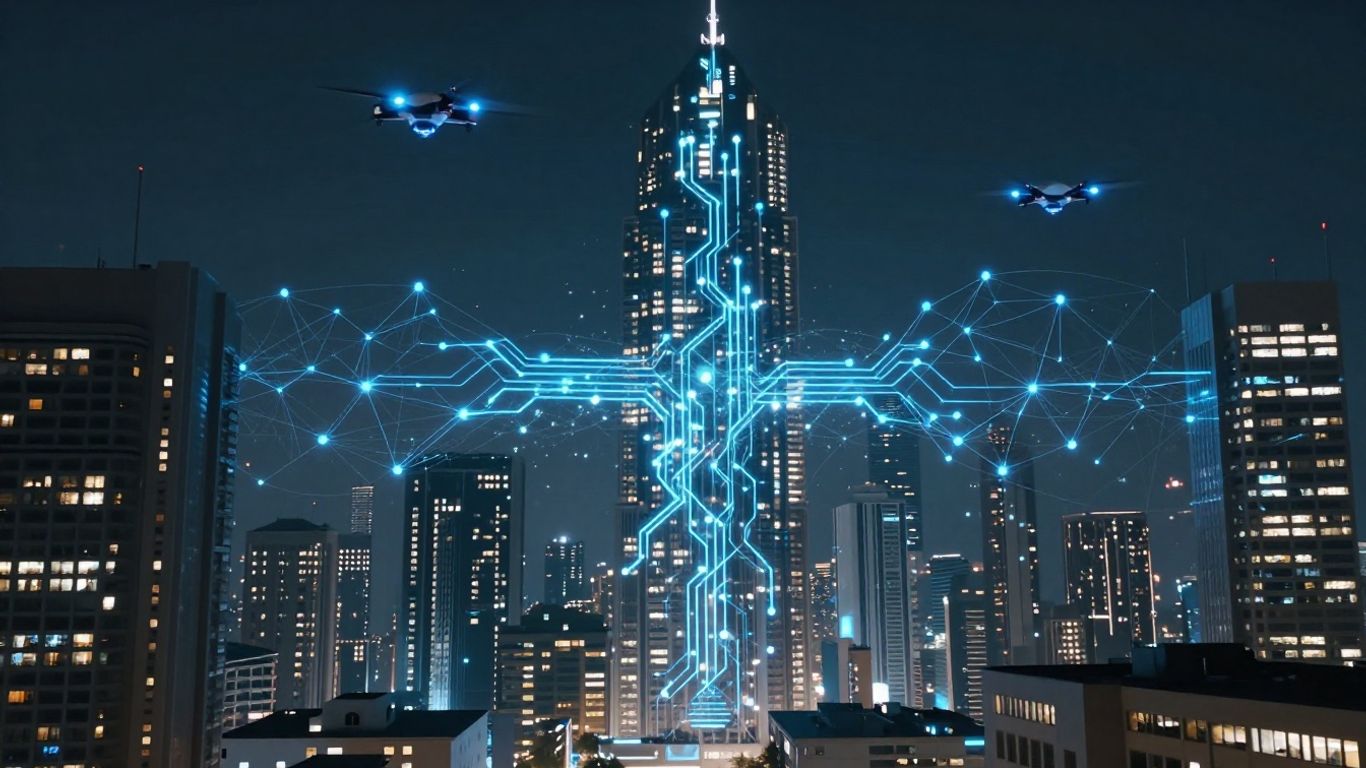
Artificial Intelligence, or AI, is no longer just a concept from science fiction; it’s a driving force shaping our world in 2026. We’re seeing AI move beyond simple tasks and become a more integrated part of our lives and work. Think of AI not just as a tool, but as a collaborator that can help us solve complex problems.
This year, AI is evolving in several key ways:
- Agentic AI: Systems are becoming more proactive. Instead of just following commands, AI agents can now anticipate needs, manage complex workflows, and even request human input at critical junctures. This means AI can take on more responsibility in projects, moving from a passive assistant to an active partner.
- Multimodal AI: AI is getting better at understanding the world like we do. By combining different types of data – like text, images, and sounds – these systems can interpret situations more holistically. This could lead to AI that can analyze complex medical cases or understand nuanced situations.
- Democratization of AI: Creating AI tools is becoming more accessible. People who aren’t deep tech experts can now design and deploy AI agents, leading to more innovative solutions driven by those closest to the actual problems.
The widespread adoption of AI in fields like finance, where over 70% of hedge funds are expected to use agentic AI for investment strategies, highlights the need for robust AI infrastructure. This shift means AI is not just about individual productivity anymore; it’s about orchestrating entire teams and projects. As AI agents become more common, managing their identities and ensuring they operate securely and as intended is becoming a major focus for businesses. This requires a clear view of who or what is accessing systems and what they are doing.
As AI systems become more sophisticated and autonomous, the focus is shifting towards managing these agents effectively. This includes understanding their actions, ensuring security, and maintaining control, especially as AI agents begin to outnumber human users in some organizational contexts. The goal is to balance increased productivity with strong governance and accountability.
2. Smart Cities
Imagine a city that just knows what you need before you do. That’s the idea behind smart cities, and by 2026, they’re really starting to take shape. Think about traffic lights that adjust themselves based on how many cars are actually there, or trash bins that signal when they’re full so collection trucks don’t waste fuel driving to empty ones. It’s all about using technology to make urban living smoother and more efficient.
These cities are built on a network of sensors and devices talking to each other. This constant flow of information helps manage things like energy use, public transport, and even emergency services much better. The goal is to make cities work smarter, not harder.
Here’s a look at what makes a city ‘smart’:
- Improved Traffic Flow: Sensors and data analysis help manage traffic lights and suggest routes to reduce congestion.
- Efficient Resource Management: Smart grids optimize energy distribution, and water systems can detect leaks quickly.
- Better Public Services: Waste collection routes are planned based on real-time needs, and public transport can adapt to demand.
- Enhanced Safety and Security: Connected cameras and sensors can help monitor public spaces and respond to incidents faster.
The ultimate aim is to create urban environments that are more sustainable, responsive, and simply better places to live.
Smart city initiatives are moving beyond just fancy gadgets. They’re about creating a connected ecosystem where technology serves the people living and working there, making daily life easier and reducing our impact on the planet. It’s a big undertaking, but the benefits for everyone are pretty significant.
3. Extended Reality
Extended Reality, sometimes called XR, brings together Augmented Reality (AR) and Virtual Reality (VR) to create new layers of experience that blend digital elements with the real world. By 2026, XR is expected to go far beyond entertainment, becoming part of many people’s daily routines in areas like work, shopping, and education.
Here’s where the impact is hard to ignore:
- Learning and Training: XR can make job training and classroom learning much more practical and interactive. Imagine doctors practicing surgery or mechanics fixing engines in a risk-free, digital environment.
- Online Shopping: Customers can try on clothes virtually or see how furniture looks in their home before buying it, a bit like how clear garment displays help with brand perception in online retail.
- Work and Collaboration: Meetings and team projects are likely to shift into mixed reality spaces, where diagrams and documents are shared in the air between coworkers.
| Area | Example Use | Expected Impact |
|---|---|---|
| Education | XR-based classrooms | Better engagement, safer training |
| Retail | Virtual try-on | Fewer returns, confident buying |
| Industry | Remote assistance | Faster repairs, less downtime |
Extended reality will probably start feeling as normal as video calls or smartphone apps did a decade ago. People are likely to talk about “XR fatigue” the same way they once did about too many Zoom meetings. The limits to its growth will probably come from practicality, not technology itself.
In short, XR is changing how we connect with both information and each other, bridging the gap between our physical space and digital overlays. That’s a pretty big shift for our everyday experiences.
4. Internet of Things
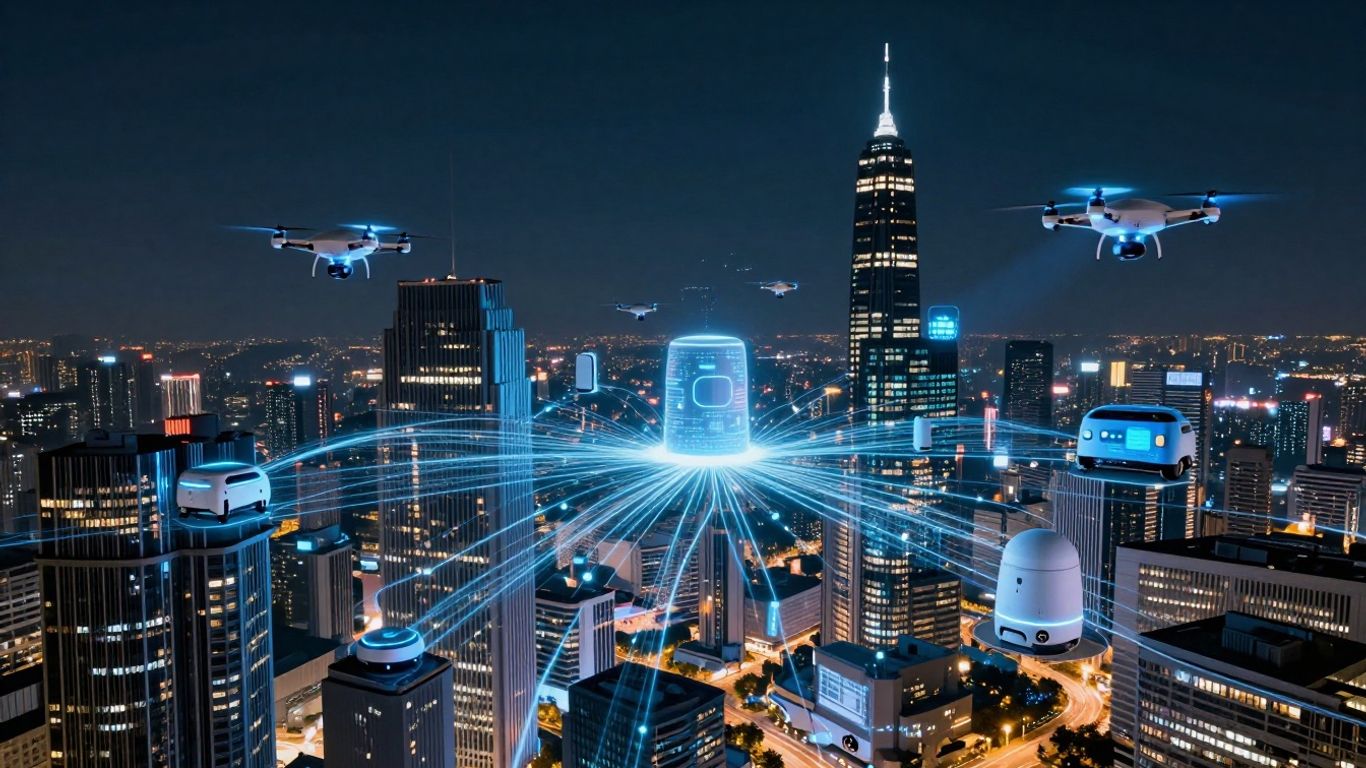
The Internet of Things, or IoT, is basically a huge network of everyday objects that are connected to the internet. Think about your smart fridge, your fitness tracker, or even connected cars – they’re all part of this growing web. By 2026, the number of these connected devices is expected to really take off.
This interconnectedness means devices can talk to each other and share data. This is a big deal because it generates a ton of information that businesses and even city planners can use. Imagine traffic lights adjusting themselves based on real-time traffic flow, or your home automatically ordering more milk when it senses you’re running low. It’s all about making things smarter and more efficient.
Here’s a look at what makes IoT so impactful:
- Data Insights: The sheer volume of data collected allows for better understanding of how things work and how they can be improved.
- Intelligent Systems: This data can be used to build systems that adapt and respond in real-time, making processes smoother.
- Efficiency Boost: From managing energy consumption in buildings to optimizing supply chains, IoT helps save time and resources.
- Cross-Sector Impact: The benefits aren’t limited to one area; they span across industries like healthcare, manufacturing, and agriculture.
The real power of IoT lies in its ability to create more responsive and adaptive environments. It’s not just about having more gadgets; it’s about how those gadgets work together to improve our lives and make systems run better. For example, in smart cities, IoT sensors can help manage resources more effectively, leading to reduced environmental impact and a better quality of life for residents. This trend is really about making our physical world more aware and interactive, much like how fashion is embracing bolder patterns in 2026 to redefine spaces [4339].
The continuous stream of data from IoT devices allows for predictive maintenance, meaning potential problems can be fixed before they even happen. This proactive approach saves money and prevents disruptions.
5. Quantum Computing
Quantum computing is moving beyond the theoretical and into practical application. Unlike traditional computers that use bits representing either a 0 or a 1, quantum computers utilize qubits. These qubits can exist in multiple states at once, a concept known as superposition. This fundamental difference allows quantum machines to tackle certain complex problems exponentially faster than even the most powerful classical supercomputers.
By 2026, we anticipate quantum computers will begin to outperform classical computers on specific, real-world challenges. This isn’t about replacing your laptop; it’s about solving problems currently out of reach for conventional technology. Think about the intricate simulations needed for developing new medicines or discovering novel materials with unique properties. These are the kinds of tasks where quantum computing is expected to make a significant impact.
Here’s a look at what’s driving this progress:
- Hardware Advancements: Companies are focusing on making quantum hardware more efficient and scalable. This involves integrating different types of processors, like CPUs and GPUs, with quantum systems to create hybrid architectures that can accelerate complex algorithms.
- Software Development: Tools are emerging to make quantum computing more accessible. For instance, AI-powered assistants are being developed to help write quantum code, simplifying the process for researchers and developers.
- Hybrid Approaches: The future likely involves a combination of quantum and classical computing working together. This synergy aims to leverage the strengths of both paradigms to solve problems that neither could handle alone.
The convergence of quantum computing with artificial intelligence is particularly noteworthy. As quantum hardware matures, its ability to process vast amounts of data and perform complex calculations could significantly accelerate AI model training and capabilities, leading to breakthroughs in areas like machine learning and complex system optimization.
While still a developing field, the progress in quantum computing by 2026 promises to unlock new possibilities across science, industry, and technology.
6. Bioprinting
Bioprinting, often called 3D bioprinting, is a fascinating area where we use living cells and special materials to build three-dimensional tissues and even organs. Think of it like a highly advanced 3D printer, but instead of plastic, it’s working with biological components. By 2026, this technology is expected to move forward quite a bit, bringing us closer to truly personalized medicine.
Imagine a future where doctors can print replacement tissues for injuries or even entire organs for transplants. This could potentially mean an end to long waiting lists for organ donors. It’s not just about organs, though. Bioprinting is also a game-changer for testing new drugs and understanding diseases better.
Here’s a quick look at what bioprinting is enabling:
- Creating Tissues and Organs: Building functional biological structures layer by layer.
- Drug Testing: Developing more accurate models to test medications without needing animal subjects.
- Disease Research: Printing specific diseased tissues to study how illnesses progress and how treatments might work.
The ultimate goal is to create patient-specific tissues and organs, reducing rejection rates and improving recovery.
Bioprinting is a complex process that requires precise control over cell placement, nutrient delivery, and structural integrity to ensure the printed tissues are viable and functional. The materials used, known as bio-inks, are crucial for success.
While we’re not quite printing full human bodies yet, the progress in creating simpler tissues like skin, cartilage, and blood vessels is significant. The potential for regenerative medicine and treating a wide range of conditions is immense, making bioprinting one of the most exciting fields to watch.
7. Hyper Automation
Hyper automation is about taking automation to the next level. It’s not just about automating a single task; it’s about automating entire business processes. Think of it as a symphony of technologies working together, including things like Robotic Process Automation (RPA), Artificial Intelligence (AI), and Machine Learning (ML). The goal is to make operations much more efficient and capable of handling larger workloads.
This trend is changing how businesses operate. Instead of people spending time on repetitive jobs, they can focus on more creative and strategic work. This shift can lead to significant improvements in how much work gets done and can also help reduce costs. However, it also brings up important questions about jobs and the need for people to learn new skills.
Here’s a look at what hyper automation aims to achieve:
- Increased Efficiency: Automating complex processes means work gets done faster and with fewer errors.
- Cost Reduction: By streamlining operations and reducing manual effort, businesses can save money.
- Focus on Human Strengths: Frees up employees to concentrate on tasks that require human judgment, creativity, and complex problem-solving.
- Improved Accuracy: Automated systems are less prone to human mistakes, leading to more reliable outcomes.
As hyper automation becomes more common, organizations will need to think carefully about how they manage their workforce. This includes providing training for new roles and ensuring that the technology is used responsibly. The focus will be on creating a partnership between humans and automated systems, where each plays to their strengths.
The integration of AI and RPA is key to unlocking the full potential of hyper automation. This allows for more sophisticated decision-making within automated workflows, moving beyond simple rule-based tasks to processes that can adapt and learn.
8. Blockchain
Blockchain technology, the system that makes cryptocurrencies work, is really starting to show its potential beyond just digital money. Think of it as a super secure, shared digital ledger that everyone involved can see, but no single person can change. In 2026, we’re seeing this technology move into all sorts of areas, not just finance.
Blockchain is poised to bring a new level of trust and transparency to how we manage information and transactions.
Here’s a look at where blockchain is making waves:
- Supply Chain Management: Imagine tracking a product from the farm or factory all the way to your doorstep. Blockchain can provide a clear, unchangeable record of every step, helping to verify authenticity and identify any issues quickly. This means fewer counterfeit goods and more confidence in what you’re buying.
- Healthcare Records: Keeping patient data secure and accessible is a big challenge. Blockchain offers a way to manage medical records with enhanced privacy and control, allowing patients to grant specific access to doctors or researchers when needed.
- Voting Systems: The idea of secure, transparent, and verifiable elections is something many people care about. Blockchain could offer a way to record votes in a way that is resistant to tampering, potentially increasing public trust in democratic processes.
While it might sound complicated, the core idea is about creating a more reliable way to share and verify information. As more industries explore its capabilities, we’ll likely see even more innovative uses emerge, impacting everything from digital identity to intellectual property management. It’s a technology that’s quietly building a more secure digital future, and it’s worth paying attention to how it develops, especially as financial institutions navigate a landscape of both challenges and opportunities.
The underlying principle of blockchain is decentralization. Instead of one central authority holding all the data, the information is spread across many computers. This makes it incredibly difficult for any single point of failure or malicious attack to compromise the system.
9. Future of Work
The way we work is changing, and by 2026, it’s going to look quite different. The pandemic really sped things up, making remote and hybrid setups the new normal for many. This shift means technology is more important than ever for keeping teams connected, no matter where they are.
We’re seeing a big move towards flexible schedules and locations. This isn’t just about working from home; it’s about rethinking how and when work gets done. Companies are investing more in tools that help people collaborate easily, share ideas, and stay productive, even when they’re not in the same office.
Here’s a look at some key aspects shaping the future of work:
- Increased Flexibility: Expect more options for remote, hybrid, and even asynchronous work, allowing individuals to better balance personal and professional lives.
- Technology-Driven Collaboration: Advanced platforms will be standard for communication, project management, and virtual team building.
- Focus on Skills: As automation takes over routine tasks, there will be a greater emphasis on human skills like creativity, critical thinking, and emotional intelligence.
- Continuous Learning: Staying relevant will require a commitment to ongoing upskilling and reskilling to adapt to new technologies and job demands.
The integration of AI and automation will continue to reshape job roles, making adaptability and a willingness to learn new skills absolutely vital for career growth.
The workplace of 2026 will likely be a blend of physical and virtual spaces, prioritizing employee well-being and productivity through flexible arrangements and robust technological support. Success will hinge on how well both organizations and individuals embrace these changes and commit to lifelong learning.
10. Brain-Computer Interfaces
Brain-Computer Interfaces, or BCIs, are pretty fascinating. Essentially, they create a direct pathway between the brain and a computer, skipping over things like keyboards or touchscreens. Think of it as a new way for us to communicate with machines, or for machines to understand us, without needing our hands or voices.
In 2026, we’re starting to see BCIs move beyond just research labs and into more practical applications. One of the big areas is helping people with disabilities. For instance, BCIs can allow individuals with severe mobility impairments to control prosthetic limbs with their thoughts, offering a much greater sense of independence. It’s also showing promise in rehabilitation, helping patients regain motor functions after injuries like strokes.
Here’s a quick look at some potential uses:
- Restoring movement: Controlling advanced prosthetics or exoskeletons.
- Communication aids: Enabling people who cannot speak to communicate through thought-based interfaces.
- Augmented experiences: Potentially interacting with virtual or augmented reality environments in new ways.
- Medical monitoring: Tracking brain activity for diagnostic purposes.
The potential for BCIs to change how we interact with technology and even how we understand ourselves is immense. Of course, with such powerful technology, there are important questions to consider, especially around privacy and ethics. As BCIs become more sophisticated, ensuring they are used responsibly will be a key focus.
As BCIs develop, the line between human thought and digital interaction will blur. This opens up incredible possibilities for aiding those with physical limitations and expanding human capabilities, but it also brings up significant ethical discussions about mental privacy and control.
Looking Ahead: Embracing the Evolving Technological Landscape
As we’ve explored these top technology trends shaping 2026, it’s clear that innovation isn’t slowing down. From smarter AI assistants to more connected cities and the exciting possibilities of quantum computing, the changes ahead are significant. It’s easy to get caught up in the speed of it all, but remember that technology is a tool. What truly matters is how we use it. Developing our own critical thinking, cherishing real-world connections, and encouraging creativity will be just as important as adopting new gadgets. We also need to keep talking about the ethical side of things and make sure technology is used for good. The future is about adapting, staying curious, and working together to make the most of these powerful new tools for a better tomorrow.
Frequently Asked Questions
What is Artificial Intelligence (AI) and how will it change things by 2026?
Artificial Intelligence, or AI, is like teaching computers to think and learn like humans. By 2026, AI will be everywhere, helping us with everyday tasks, making customer service better with smart chatbots, and even helping doctors find new medicines.
How will Smart Cities make our lives better?
Smart cities use technology to make city living easier and more eco-friendly. Imagine traffic lights that change based on how many cars there are, or trash collection that’s planned perfectly. By 2026, cities will use sensors and data to run more smoothly and be better for everyone.
What is Extended Reality (XR) and why is it important?
Extended Reality, or XR, combines Virtual Reality (VR) and Augmented Reality (AR). Think of VR as stepping into a whole new digital world, and AR as adding digital things to the real world you see. By 2026, XR will be used for fun things like virtual concerts and for important training in jobs.
What is the Internet of Things (IoT)?
The Internet of Things, or IoT, means connecting everyday objects to the internet. Your smart fridge, your watch that tracks your steps, and even your car can be part of this network. By 2026, there will be tons of these connected devices, helping us gather useful information and make things work smarter.
What’s the big deal about Quantum Computing?
Quantum computing uses special ‘qubits’ that can do many things at once, making them super powerful for solving really hard problems. While it’s still new, by 2026, quantum computers could help us discover new materials, create new medicines, and understand complex financial systems better.
How is Bioprinting going to change medicine?
Bioprinting is like using a 3D printer, but with living cells to create body parts. By 2026, this technology could help doctors create new tissues or even organs for people who need them, possibly making organ donation waiting lists a thing of the past and leading to personalized treatments.
The post The Top 10 Technology Trends Shaping Our Future in 2026 appeared first on IntelligentHQ.
Read more here: https://www.intelligenthq.com/top-10-technology-trends-3/