As we move closer to 2026, the world of technology is changing fast. New inventions are showing up all the time that could change how we do things, from how we get around to how we stay healthy. This article looks at the top 10 technology trends that are expected to make a big impact. These are the top 10 technology trends that will shape our world.
Key Takeaways
- Artificial Intelligence is becoming a bigger part of everyday life, helping with tasks and making customer service better.
- Smart Cities will use technology to manage things like traffic and waste more efficiently, making urban living smoother.
- Extended Reality, combining AR and VR, will change how we learn, work, and shop by blending digital and physical worlds.
- The Internet of Things will connect more devices, giving us more data and smarter systems across many areas.
- Quantum Computing offers a huge jump in processing power, which could lead to breakthroughs in science and medicine.
1. Artificial Intelligence
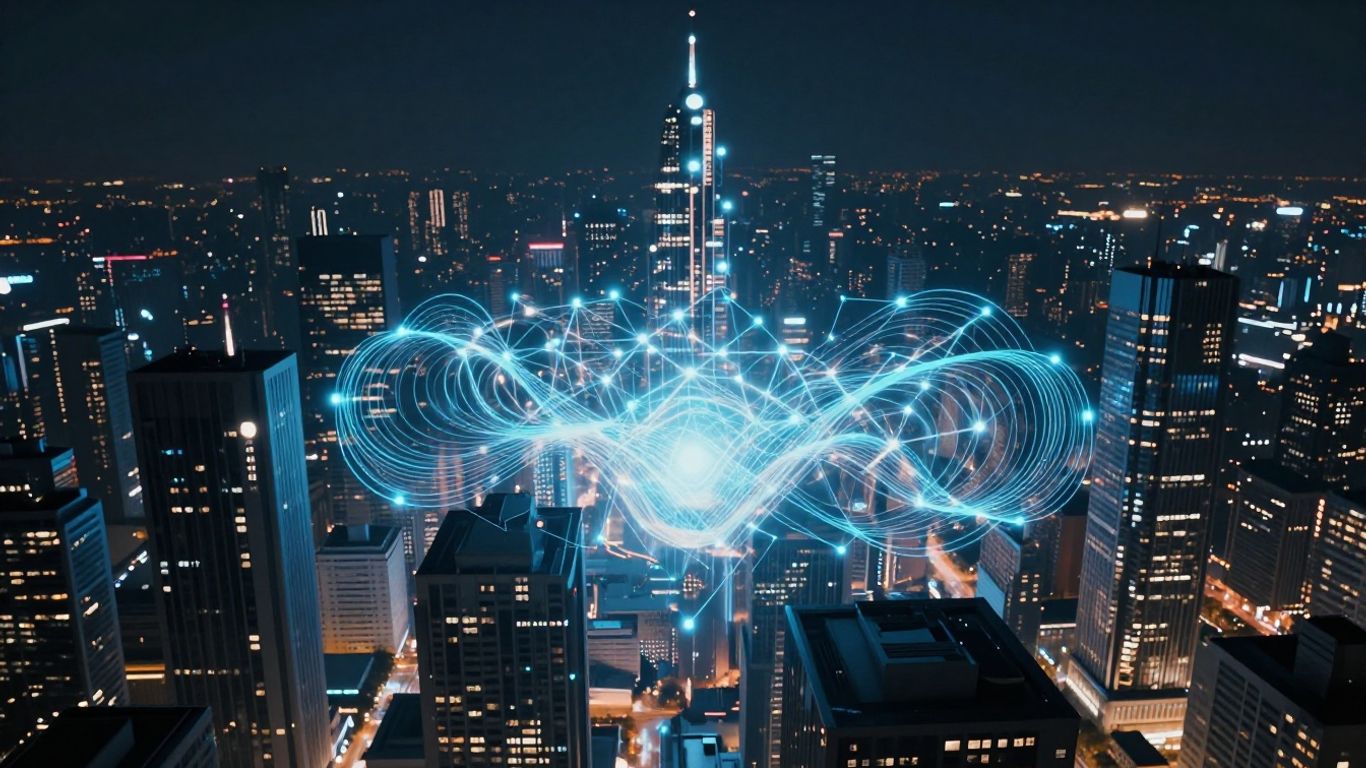
Artificial Intelligence, or AI, is no longer just a concept from science fiction; it’s a real force shaping our world in 2026. We’re seeing AI move beyond simple tasks and become deeply integrated into our daily lives and work. Think of sophisticated personal assistants that can anticipate what you need before you even ask, or customer service bots that offer help so smoothly, you might forget you’re not talking to a person.
AI’s impact is broad, touching many areas:
- Business Automation: AI is taking over repetitive tasks, freeing up human workers for more complex jobs.
- Decision Making: It’s helping businesses make smarter, faster choices by analyzing huge amounts of data.
- Personalized Experiences: From shopping to entertainment, AI tailors interactions to individual preferences.
- Healthcare Advances: AI is assisting in diagnosing illnesses and speeding up the discovery of new medicines.
The trend is clear: AI is becoming a partner in how we work and live. For instance, many hedge funds are now using agentic AI for their investment strategies, showing how advanced these systems have become [e5c2]. This shift means AI isn’t just about doing things faster; it’s about doing them differently and often, better.
However, this rapid integration isn’t without its challenges. People sometimes worry about AI taking jobs or distrusting its decisions. There’s also the risk of AI systems making mistakes or being misused, leading to unintended consequences. Building trust and setting clear boundaries for AI actions are key as we move forward.
As AI systems become more capable, we need to focus on responsible development and deployment. This includes addressing ethical concerns and ensuring that AI benefits everyone, not just a select few. The goal is to augment human capabilities, not replace them entirely, creating a collaborative future.
2. Smart Cities
Imagine cities that feel alive, responding to the needs of everyone living and working within them. That’s the promise of smart cities, and by 2026, we’re seeing these ideas move from concept to reality.
At its core, a smart city uses technology to make urban life better. Think about traffic lights that adjust themselves based on how many cars are actually on the road, or waste collection routes that change dynamically to pick up bins only when they’re full. It’s all about making things run more smoothly and efficiently.
This interconnectedness is built on a foundation of sensors, devices, and data. These elements work together to create a network that can monitor and manage city resources in real-time. The goal is to improve daily life for residents while also making the city more sustainable.
Here’s a look at what makes a city smart:
- Efficient Resource Management: Optimizing energy use, water distribution, and waste disposal.
- Improved Transportation: Smarter traffic flow, better public transit, and easier parking.
- Enhanced Public Safety: Real-time monitoring and faster emergency response.
- Better Citizen Services: More responsive government services and accessible information.
The ultimate aim is to create urban environments that are not only technologically advanced but also more livable and environmentally friendly.
Smart city initiatives are about more than just gadgets; they’re about using data and connectivity to solve real-world urban challenges, from traffic jams to energy waste, ultimately improving the quality of life for everyone.
3. Extended Reality
Extended Reality, or XR, is a broad term that covers virtual reality (VR), augmented reality (AR), and mixed reality (MR). Think of it as a spectrum that blends our physical world with digital elements. VR completely immerses you in a computer-generated environment, while AR overlays digital information onto your view of the real world. MR takes it a step further, allowing digital objects to interact with your physical surroundings.
By 2026, XR is moving beyond gaming and entertainment. We’re seeing it pop up in practical applications that change how we work, learn, and shop. Imagine a mechanic using AR glasses to see repair instructions overlaid directly onto an engine, or a shopper virtually trying on clothes without ever stepping into a fitting room. This technology is set to make interactions more intuitive and informative.
Here’s a look at how XR is making waves:
- Training and Education: XR offers hands-on learning experiences that were previously impossible. Trainees can practice complex procedures in a safe, simulated environment, reducing errors and improving skill retention. This is particularly impactful in fields like healthcare and manufacturing.
- Retail and E-commerce: Customers can visualize products in their own homes before buying, like seeing how a new sofa would look in their living room. This virtual try-on capability helps reduce returns and boosts buyer confidence. Flat lay clothing photography is crucial for modern branding in online retail. It offers customers transparency by clearly showcasing garment shape and scale, aiding in purchasing decisions. This visual approach enhances brand perception and engagement.
- Collaboration and Design: Teams can meet in virtual spaces to collaborate on projects, review 3D models, and brainstorm ideas, regardless of their physical location. This can speed up design cycles and improve communication across dispersed teams.
The integration of digital content with our physical surroundings is becoming more sophisticated. This isn’t just about novelty; it’s about creating more efficient, engaging, and informative experiences that can genuinely improve decision-making and productivity across various industries.
The potential for XR to transform how we interact with information and each other is immense. As the technology becomes more accessible and user-friendly, expect to see it woven into the fabric of our daily lives in ways we’re only just beginning to imagine.
4. Internet of Things
The Internet of Things, or IoT, is all about connecting everyday objects to the internet. Think of your smart thermostat, your fitness tracker, or even your refrigerator – these are all examples of IoT devices. By embedding sensors and software into these items, they can collect and exchange data, making them “smart.” This interconnected web is growing incredibly fast, and by 2026, we’ll see even more devices joining the network.
The sheer volume of data generated by these connected devices is transforming how businesses and governments operate. This data provides insights that were previously impossible to gather, leading to smarter systems that can adapt in real-time. This boosts efficiency across the board, from how factories run to how cities manage resources.
Here’s a look at some key areas where IoT is making a difference:
- Smart Homes: Devices that automate tasks, manage energy use, and improve security.
- Wearable Technology: Fitness trackers and smartwatches that monitor health and activity.
- Industrial IoT (IIoT): Connecting machinery and sensors in factories for better monitoring and predictive maintenance.
- Connected Vehicles: Cars that communicate with each other and infrastructure for improved safety and traffic flow.
The expansion of IoT means more convenience and efficiency, but it also brings challenges in managing all that data and keeping everything secure. It’s a balancing act as we integrate these technologies more deeply into our lives.
This interconnectedness allows for more informed decision-making, as patterns and anomalies can be identified quickly. The impact is felt across nearly every sector, promising a future where our physical and digital worlds are more intertwined than ever before.
5. Quantum Computing
Quantum computing is really starting to get interesting. Unlike the computers we use every day, which work with bits that are either a 0 or a 1, quantum computers use something called qubits. These qubits can be a 0, a 1, or even both at the same time – that’s called superposition. This ability lets them tackle incredibly complex problems way, way faster than even the most powerful supercomputers we have now.
Think of it like this: a regular computer checks every single path in a maze one by one. A quantum computer, thanks to superposition, can explore many paths all at once. This makes it a game-changer for certain types of calculations.
While we’re not quite at the point where everyone has a quantum computer on their desk, 2026 is shaping up to be a year where we’ll see some significant steps forward. We’re talking about potential breakthroughs in areas like designing new materials, discovering new medicines, and even making financial models much more accurate.
Here’s a look at what makes quantum computing so special:
- Qubits and Superposition: The core concept that allows for massive parallel processing.
- Entanglement: Another quantum phenomenon where qubits become linked, allowing for even more complex computations.
- Error Correction: A major hurdle being worked on, as quantum states are very fragile.
The potential for quantum computing to solve problems currently considered impossible is immense. While still in its early phases, its impact on scientific research and complex problem-solving is expected to grow substantially in the coming years.
We’re seeing a lot of investment and research pouring into this field. It’s not just about faster calculations; it’s about enabling entirely new kinds of discovery and innovation that were previously out of reach.
6. Bioprinting
Bioprinting, often called 3D bioprinting, is a fascinating area where we use living cells and special materials to build three-dimensional structures, kind of like printing with biological stuff. Think of it as a super-advanced 3D printer, but instead of plastic, it’s working with the building blocks of life.
In 2026, this technology is really starting to show its potential, especially in medicine. The big dream is to be able to print replacement tissues or even whole organs for people who need them. This could eventually mean shorter waiting lists for organ transplants and more personalized treatments.
Here’s a look at what bioprinting is making possible:
- Creating Tissues: Researchers are getting better at printing complex tissues like skin, cartilage, and even parts of organs. This is a huge step for testing new drugs and understanding diseases.
- Organ Development: While printing a full, complex organ like a heart is still a ways off, progress is being made on simpler structures and functional units of organs.
- Drug Testing: Bioprinted tissues offer a more realistic way to test how new medications might work, potentially speeding up the drug discovery process and reducing the need for animal testing.
- Personalized Medicine: Imagine printing a patch of skin perfectly matched to a burn victim or creating a piece of cartilage for an athlete’s injury. That’s the kind of personalized approach bioprinting aims for.
The ability to construct biological structures layer by layer holds immense promise for regenerative medicine and beyond.
It’s not just about organs, though. Bioprinting is also being explored for creating models of diseases in a lab setting. This allows scientists to study how diseases develop and how different treatments might affect them, all in a controlled environment. It’s a complex field, but the progress we’re seeing is truly remarkable and points towards a future where we can repair and replace parts of the human body with greater precision.
7. Hyper Automation
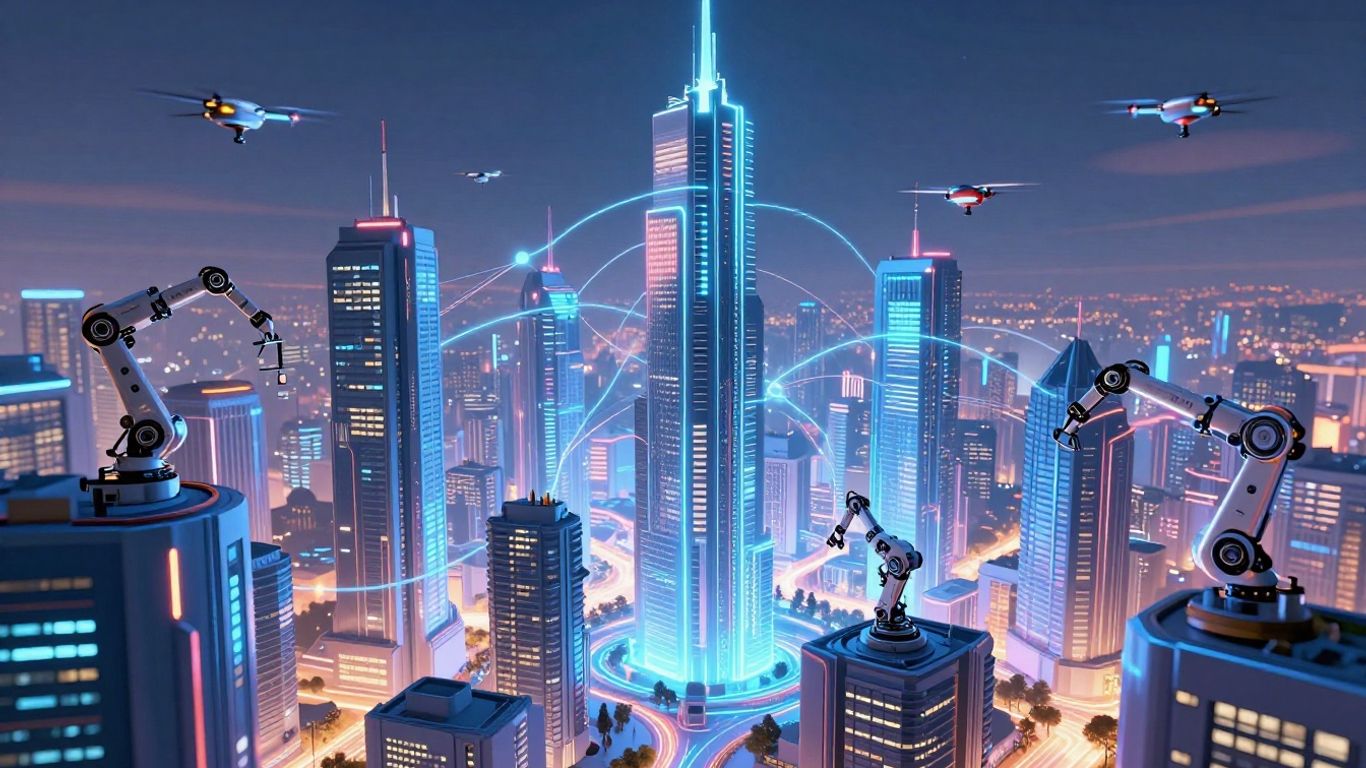
Hyper automation is changing how organizations work by joining together advanced tools like robotic process automation (RPA), artificial intelligence (AI), and machine learning (ML). The goal is to automate end-to-end workflows, moving beyond single simple tasks to entire business processes. This makes things faster and often much more accurate, helping companies meet changing demands, lower mistakes, and scale up without adding a lot of staff.
Key aspects of hyper automation include:
- Linking different systems so work moves smoothly between them without human help.
- Using software robots to handle repetitive jobs, such as processing documents, entering data, or managing supply chains.
- Applying AI and ML to make decisions inside automated processes, not just follow pre-set steps.
- Creating smart checks and balances to keep an eye on automated systems, even as complexity grows.
It isn’t just about technology. With widespread automation, people need different skills and ways of working. Many companies are using quality training programs, like those that come with agile project management certification, to teach staff how to work alongside and manage automated tools. This helps maintain a human touch in creative or sensitive jobs.
A quick look at the impact of hyper automation, based on results reported by some large organizations:
| Impact Area | Measured Change |
|---|---|
| Processing Times | 2x faster |
| Operational Expenses | Cut by 80% |
| Employee Time Freed | Up to 50% |
| Error Rates | Down by 65% |
It’s common to see teams worried that automation will take their jobs, but as menial duties disappear, more people get to focus on planning, creating, or handling exceptions—the things that robots and scripts can’t manage alone.
As we look toward 2026, hyper automation is moving from trend to necessity for firms that want to stay efficient and prepared for the future. Employees, too, get the chance to work on more meaningful projects as day-to-day tasks are taken care of by smart systems.
8. Blockchain
Blockchain, the technology behind cryptocurrencies, is really starting to show its potential beyond just digital money. Think of it as a super secure, shared digital ledger that makes tracking transactions and information incredibly transparent and tamper-proof. In 2026, we’re seeing this tech move into all sorts of areas, not just finance.
One of the biggest impacts is in supply chain management. Imagine knowing exactly where your product came from, every step of the way, with no room for doubt. This helps verify authenticity and can really streamline how goods move around the world. It’s also making waves in healthcare for secure patient record-keeping and even in making voting systems more trustworthy.
Here’s a quick look at some key areas where blockchain is making a difference:
- Supply Chain Transparency: Tracking goods from origin to destination with verifiable data.
- Product Authenticity: Proving that a product is genuine, which is huge for combating counterfeits.
- Secure Data Management: Creating immutable records for sensitive information, like medical histories.
- Decentralized Finance (DeFi): Offering alternative financial services outside traditional banking systems.
The core idea is building trust in digital interactions without needing a central authority. This shift is important for many industries looking to improve security and efficiency. As banks navigate changing market dynamics, understanding these new technologies is key for effective cost management.
The distributed nature of blockchain means that data isn’t stored in one place, making it much harder to hack or alter. This inherent security is what’s driving its adoption across various sectors.
9. Multi-Agent Orchestration
You know how sometimes you have a big project, and it’s just too much for one person to handle? You break it down, assign different parts to different people, and then make sure everyone’s work fits together. Multi-agent orchestration is kind of like that, but for artificial intelligence.
We’ve seen AI agents get pretty good at handling specific tasks, like answering customer questions or sorting through documents. But many real-world problems are more complex. They involve multiple steps, different kinds of information, and require a coordinated effort. That’s where multi-agent orchestration comes in. It’s about getting several AI agents to work together, each with its own specialty, to tackle these bigger, more involved challenges. Think of it as building a team of AI specialists to get a job done.
The core idea is to move beyond single, isolated AI agents and create systems where multiple agents can communicate, collaborate, and coordinate their actions to achieve a common goal. This could mean automating entire business processes, from initial data analysis to final decision-making, with different agents handling distinct phases.
Here’s a look at how this is shaping up:
- Agent Specialization: Agents are being designed with specific roles, much like human team members. One agent might be a data analyst, another a coder, and a third a communication specialist. This allows for focused work and better outcomes.
- Inter-Agent Communication: For agents to work together effectively, they need to talk to each other. New protocols and frameworks are emerging to allow agents from different systems or even different companies to exchange information and coordinate tasks smoothly.
- Supervisory Agents: To manage these teams of agents, a ‘supervisor’ agent is often introduced. This overseer agent can assign tasks, monitor progress, enforce rules, and ensure the overall objective is met, adding a layer of governance and control.
This approach promises to automate more complex workflows that were previously too difficult for single AI models. It’s a step towards more autonomous and capable AI systems that can handle intricate, multi-stage operations.
The development of multi-agent orchestration is a natural progression from the initial excitement around large language models. While LLMs are powerful, their limitations in handling complex, multi-step processes became apparent. Orchestrating multiple agents offers a path to overcome these limitations, enabling more sophisticated automation and a greater return on AI investments.
10. Resilient Supply Chain Sourcing
The way companies get their materials and make their products is changing, and fast. For a long time, the main goal was just to find the cheapest option, no matter where it came from. But recent years have shown us that’s not always the best idea. Geopolitical issues and the sheer size of some global companies mean that relying on a single, far-off source can be risky. Now, the focus is shifting towards making sure supply chains can handle disruptions, even if it means paying a bit more upfront.
Think about what happened during the pandemic. Many businesses struggled because they couldn’t get the parts or products they needed. That strain continued into 2025 with new kinds of problems popping up. This has led many organizations to rethink their sourcing strategies. Instead of just looking at the price tag, they’re asking: ‘What happens if this supplier can’t deliver?’
Building a supply chain that can bounce back is becoming a top priority for businesses in 2026.
Here are some key ways companies are working on this:
- Diversifying Suppliers: Instead of relying on one or two main suppliers, companies are spreading their business across multiple vendors, often in different geographic regions. This way, if one supplier faces an issue, others can pick up the slack.
- Nearshoring and Onshoring: Bringing production closer to home, either within the country (onshoring) or to nearby countries (nearshoring), reduces reliance on distant global networks. This can cut down on shipping times and make it easier to manage quality and compliance.
- Increasing Transparency: Knowing exactly where your materials come from and under what conditions they were produced is more important than ever. Technology is helping companies track their supply chains with greater detail, which is also important for meeting ethical and environmental standards.
- Scenario Planning: Businesses are using advanced tools to model different future scenarios. This helps them understand potential risks, like new trade policies or natural disasters, and plan how their supply chain would respond.
The complexity of global trade and the increasing demand for ethical and sustainable practices mean that simply finding the lowest price is no longer enough. Companies need to build supply chains that are not only efficient but also robust and adaptable to unexpected challenges.
While these changes might mean higher initial costs or more complex management, the long-term benefit is a more stable and reliable business. It’s about making sure that when unexpected events happen, your business can keep running smoothly.
Looking Ahead
As we wrap up our look at the top technology trends for 2026, it’s clear that innovation isn’t slowing down. These advancements, from smarter AI to more connected devices, are changing how we live and work. It’s a lot to take in, but the main thing is to stay curious and keep learning. The future is built by those who can adapt and use these new tools wisely. By focusing on what matters – like critical thinking and human connection – we can make sure technology helps us build a better world for everyone.
Frequently Asked Questions
What is Artificial Intelligence (AI) and how will it change things by 2026?
Artificial Intelligence, or AI, is about making computers smart enough to do things that usually require human thinking. By 2026, AI will be everywhere, helping us with daily tasks, making customer service better with smart chatbots, and even helping doctors find diseases faster. It’s like having a super-helpful assistant that learns and gets better over time.
How will Smart Cities make our lives better?
Smart Cities use technology, like sensors and connected devices, to make cities work better for the people living in them. Imagine traffic lights that change based on how busy the roads are, or trash collection that’s planned perfectly. By 2026, these cities will be more efficient, eco-friendly, and responsive to what people need.
What is Extended Reality (XR) and why is it important?
Extended Reality, or XR, is a mix of Augmented Reality (AR) and Virtual Reality (VR). AR adds digital things to the real world you see, like a game character appearing in your living room. VR creates a whole new digital world you can step into. By 2026, XR will be used for fun things like virtual concerts and for practical things like training workers in factories, making learning more exciting and hands-on.
What’s the Internet of Things (IoT) and what will it do by 2026?
The Internet of Things, or IoT, is like a giant network where everyday objects have internet access. Think of your smart fridge, your fitness tracker, or even connected cars. By 2026, there will be way more of these devices, collecting information that helps businesses and cities run smoother and make smarter decisions.
How is Quantum Computing different from regular computers?
Regular computers use bits that are either a 0 or a 1. Quantum computers use ‘qubits’ that can be both 0 and 1 at the same time, which lets them do incredibly complex calculations much, much faster. While it’s still new, by 2026, quantum computing could help us discover new medicines, create better materials, and solve really tough problems in science and finance.
What is Bioprinting and how could it help us?
Bioprinting is like using a 3D printer, but instead of plastic, it uses living cells and materials to build body parts like tissues and organs. By 2026, this technology could be a game-changer for medicine, helping doctors create custom organs for people who need transplants, which might mean shorter waiting lists and more personalized treatments.
The post The Top 10 Technology Trends Shaping Our World in 2026 appeared first on IntelligentHQ.
Read more here: https://www.intelligenthq.com/top-10-technology-trends-2/