Technology. It’s a word we hear all the time, but what does it really mean? We often think of the latest gadgets, but the definition of technology goes much deeper. It’s about how humans solve problems and make things work better, stretching all the way back to the earliest tools. This guide explores what technology truly is, how it has changed over time, and what it means for us today and tomorrow. Let’s get into it.
Key Takeaways
- Technology is essentially the use of knowledge to create tools and methods that solve practical problems or make tasks easier.
- The history of technology shows a continuous progression, from simple tools in ancient times to complex systems like AI today.
- From faster communication to better health, technology brings many advantages to our daily lives.
- Major fields like IT, AI, biotech, and space tech are currently shaping how we live and work.
- The future promises even more advanced technologies, including smarter AI, connected devices, and new computing power.
Understanding the Core Definition of Technology
When we talk about technology, it’s easy to picture the latest smartphones or complex computer systems. But the idea of technology is much broader and has been with us for a very long time. At its heart, technology is about using what we know to solve problems or make things easier. It’s the practical application of knowledge, whether that knowledge comes from scientific discovery or simple observation.
Technology as Applied Knowledge
Think of it this way: science is about understanding how the world works, while technology is about using that understanding to create something useful. It’s the bridge between an idea and a tangible solution. This could be anything from the invention of the wheel, which revolutionized transportation, to the development of writing systems that allowed us to record and share information across generations. Every tool, every method, and every system we create to meet a need or improve a task falls under the umbrella of technology.
The Process of Technological Creation
Creating technology typically follows a path. It usually starts with a need or a problem that needs addressing. Then, we draw upon existing knowledge or conduct research to come up with an idea for a solution. This idea is then designed and developed into a tool, a process, or a system. Finally, this creation is put into practice to serve its intended purpose.
Here’s a simplified look at the process:
- Identify a Need: Recognizing a gap or a challenge.
- Develop an Idea: Brainstorming solutions based on knowledge and principles.
- Design and Build: Creating the actual tool, method, or system.
- Implement and Refine: Putting it to use and making improvements.
Beyond Devices: A Broader Perspective
It’s important to remember that technology isn’t just about electronic gadgets. The clothes you wear, the way you cook your food, and even the organization of your community are all forms of technology. They are systems and methods developed over time to address human needs. For instance, the development of agriculture, with its tools and techniques, was a massive technological leap that allowed human societies to grow and flourish. Understanding this broader definition helps us appreciate the pervasive role technology plays in every aspect of our lives, from the simplest daily tasks to the most complex global systems. This perspective is key to understanding how small fashion brands, for example, must adapt their strategies to the evolving landscape [5d04].
Technology is fundamentally a human endeavor, born from our innate desire to overcome limitations and improve our circumstances. It is a continuous cycle of innovation, adaptation, and application that has shaped our past and will undoubtedly define our future.
The Historical Journey of Technological Advancement
Foundations in Ancient Civilizations
Long before the digital age, humanity was already laying the groundwork for the technologies we use today. Think about the earliest humans discovering how to control fire, a monumental step that provided warmth, protection, and a way to cook food. This wasn’t just a lucky accident; it was the application of knowledge about the natural world to solve a problem. Later, the invention of the wheel, perhaps one of the most significant early technologies, revolutionized transportation and labor. Imagine trying to move heavy objects without it! Alongside these physical tools, the development of writing systems allowed for the recording and transmission of knowledge across generations, a form of information technology in its own right. Irrigation systems, developed by ancient civilizations like those in Mesopotamia and Egypt, allowed for more stable food production, leading to settled communities and the rise of cities. These weren’t just simple tools; they were complex systems designed to meet fundamental human needs.
The Transformative Industrial Revolutions
The 18th and 19th centuries brought about a period of rapid change known as the Industrial Revolution. The invention of the steam engine, for instance, was a game-changer. It moved production from small workshops into large factories, fundamentally altering how goods were made and where people lived and worked. This era also saw the development of new transportation methods, like the steam-powered train, which drastically reduced travel times and connected distant regions. Communication also took a leap forward with the invention of the telegraph, allowing messages to be sent across vast distances almost instantaneously. These advancements didn’t just change industries; they reshaped societies, leading to urbanization and new economic structures.
The Dawn of the Information Age
The 20th century ushered in the Information Age, largely driven by breakthroughs in electronics. The invention of the transistor, a tiny component that could amplify or switch electronic signals, was a critical step. It paved the way for the development of smaller, more powerful, and more affordable electronic devices, most notably computers. The subsequent creation and widespread adoption of the internet connected these machines globally, creating an unprecedented network for sharing information. This era democratized access to knowledge and communication, allowing people to connect and share ideas on a scale never before possible.
Entering the Smart and Connected Era
We are currently living in what many call the ‘smart’ or ‘connected’ era, characterized by the deep integration of technology into our daily lives. Smartphones have become ubiquitous, acting as personal computers, communication devices, and much more, all in our pockets. Cloud computing allows us to store and access data from anywhere, while the Internet of Things (IoT) is connecting everyday objects, from thermostats to cars, to the internet, enabling them to communicate and automate tasks. This constant connectivity and the data it generates are fueling further innovation, particularly in fields like artificial intelligence, which is beginning to automate complex decision-making processes and personalize our experiences in profound ways.
The Profound Benefits Technology Offers Humanity
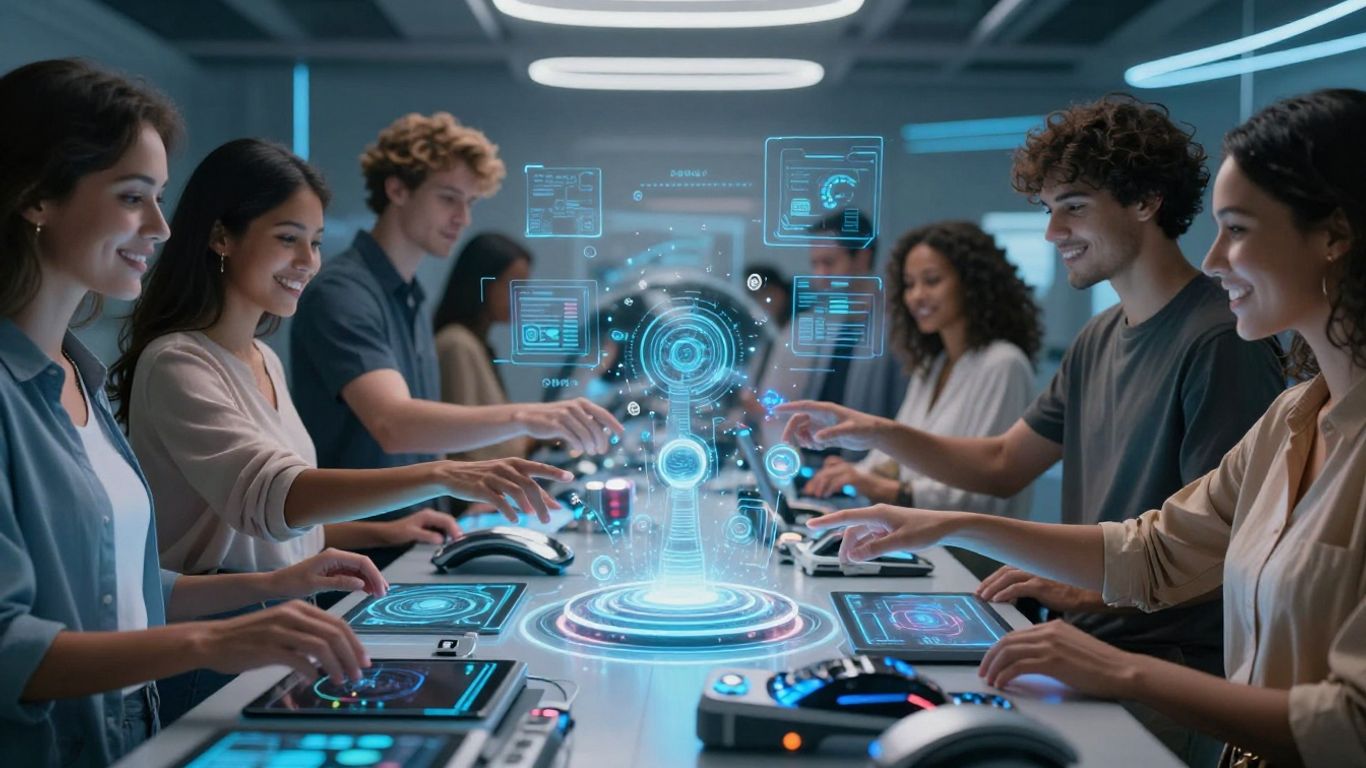
Technology, in its many forms, has fundamentally reshaped human existence, bringing about changes that touch nearly every aspect of our lives. It’s not just about the gadgets we use; it’s about the solutions and opportunities they create. The true value of technology lies in its ability to solve problems and improve the human condition.
Enhanced Communication and Information Access
One of the most visible impacts of technology is how it has shrunk the world. We can now connect with people across continents in an instant, sharing ideas, experiences, and support. Accessing information that was once confined to libraries or specialized archives is now at our fingertips.
- Instantaneous Global Connection: Video calls, messaging apps, and social platforms allow us to maintain relationships and collaborate regardless of physical distance.
- Vast Knowledge Repositories: The internet provides access to an unprecedented amount of data, research, and educational materials, democratizing learning.
- Real-time Updates: News, weather, and critical information can be disseminated rapidly, keeping communities informed and prepared.
The ability to share information and communicate freely has been a powerful force for social change and personal connection.
Boosting Efficiency Through Automation
Technology has revolutionized how we work and produce. Automation, driven by sophisticated machinery and software, handles repetitive and labor-intensive tasks, freeing up human potential for more creative and complex endeavors.
- Industrial Production: Robots and automated systems in factories increase output and precision.
- Administrative Tasks: Software can manage schedules, process data, and organize information, saving countless hours.
- Logistics and Delivery: Advanced systems optimize supply chains, making the movement of goods faster and more reliable.
Advancements in Health and Well-being
Perhaps nowhere is the impact of technology more critical than in healthcare. Innovations have led to longer lifespans and improved quality of life for millions.
- Diagnostic Tools: Technologies like MRI and CT scanners allow for early and accurate detection of diseases.
- Therapeutic Innovations: From advanced surgical robots to gene therapies and new pharmaceuticals, treatments are becoming more targeted and effective.
- Personal Health Monitoring: Wearable devices and health apps help individuals track their well-being and manage chronic conditions.
Expanding Educational Horizons
Technology has broken down traditional barriers to education, making learning more accessible, personalized, and engaging.
- Online Learning Platforms: Students can access courses from institutions worldwide, often at their own pace.
- Digital Resources: E-books, interactive simulations, and virtual labs provide dynamic learning experiences.
- Personalized Learning Paths: Adaptive software can tailor educational content to individual student needs and learning styles.
Key Technological Fields Shaping Our World
Our world today is a tapestry woven with threads of innovation from various technological domains. These fields aren’t just abstract concepts; they are the engines driving progress and reshaping how we live, work, and interact. Understanding these areas gives us a clearer picture of the present and a glimpse into what’s next.
Information and Communication Technologies
This is the backbone of our connected existence. Information and Communication Technologies, or ICT, cover everything from the internet infrastructure and the software we use daily to the hardware in our pockets and the mobile networks that keep us linked. Think about how businesses operate online, how we share information instantly across continents, or how we access vast libraries of knowledge with a few taps. It’s all thanks to the continuous evolution within ICT. The development of new programming languages and cloud-native approaches are just a couple of the advancements making software creation faster and more accessible.
The Power of Artificial Intelligence
Artificial Intelligence (AI) is no longer science fiction; it’s a practical force transforming industries. AI systems are designed to learn from data, recognize patterns, and make decisions, often mimicking human cognitive abilities. This has led to breakthroughs in areas like natural language processing, image recognition, and predictive analytics. AI is being used in everything from fraud detection in finance to personalized recommendations in entertainment. The field is rapidly advancing, with tools like AI Math Solvers helping students and professionals tackle complex problems.
Innovations in Biotechnology and Energy
Biotechnology focuses on using living organisms or their components to develop new products and technologies. This has led to significant advancements in medicine, such as new drug development and gene therapies, as well as improvements in agriculture for greater efficiency. Alongside this, energy technologies are crucial for our planet’s future. The push towards renewable sources like solar and wind power, coupled with innovations in energy storage and efficiency, is reshaping our global energy landscape. These fields are vital for addressing some of humanity’s biggest challenges.
Exploring the Frontiers of Space Technology
Space technology might seem distant, but its impact is felt every day. Satellites orbiting Earth provide us with essential services like GPS navigation, accurate weather forecasting, and global communication networks. The continuous development in this area not only expands our understanding of the universe but also yields technologies that improve life on Earth. From advanced materials to remote sensing, the applications are far-reaching.
The rapid development across these key technological fields highlights a dynamic period of human ingenuity. Each area builds upon the last, creating a synergistic effect that accelerates progress and opens up new possibilities we are only beginning to explore.
Gazing into the Future of Technology
The pace of technological change is only picking up speed. What seems like science fiction today could be commonplace tomorrow. We’re on the cusp of some truly mind-bending advancements that promise to reshape our world in ways we’re only beginning to imagine.
The Rise of Advanced Artificial Intelligence
Artificial Intelligence (AI) is already a big part of our lives, but we’re heading towards something even more significant: Artificial General Intelligence (AGI). Unlike today’s AI, which is good at specific tasks, AGI would possess human-like cognitive abilities, capable of learning, understanding, and applying knowledge across a wide range of problems. This could lead to breakthroughs in scientific research, medicine, and complex problem-solving.
The Connected World of the Internet of Things
Imagine a world where almost everything is connected – your home appliances, your car, even the city infrastructure. This is the vision of the Internet of Things (IoT). Billions of devices will communicate and share data, leading to smarter homes, more efficient cities, and automated systems that simplify our daily routines. Think about traffic lights adjusting in real-time based on traffic flow or your refrigerator ordering groceries when supplies run low.
Immersive Experiences with Extended Reality
Extended Reality (XR) is the umbrella term for Virtual Reality (VR) and Augmented Reality (AR). VR immerses you in a completely digital world, while AR overlays digital information onto the real world. Together, they are set to revolutionize entertainment, education, training, and even how we interact with products and services. Soon, the line between the digital and physical worlds will become incredibly blurred.
Decentralization Through Blockchain and Web3
Blockchain technology, the foundation of cryptocurrencies, is paving the way for a more decentralized internet, often referred to as Web3. This shift aims to give users more control over their data and online identities, moving away from the centralized control of large tech companies. It promises greater transparency and security in digital transactions and interactions.
The Potential of Quantum Computing
Quantum computing represents a massive leap forward in processing power. These machines harness the principles of quantum mechanics to solve problems that are currently impossible for even the most powerful supercomputers. While still in its early stages, quantum computing has the potential to revolutionize fields like drug discovery, materials science, and complex financial modeling.
Technology: A Tool for Progress
So, we’ve looked at what technology really is, going all the way back to the wheel and up to today’s smart machines. It’s not just gadgets; it’s how we use what we know to solve problems and make things work better. From making farming easier to connecting the whole world, technology has changed everything. It helps us talk to people far away, learn new things, and even stay healthier. As we look ahead, things like AI and new kinds of computing promise even bigger changes. But remember, technology itself isn’t good or bad. It’s what we do with it that counts. Understanding it helps us see where we’ve been and where we’re going, shaping a future that hopefully benefits everyone.
Frequently Asked Questions
What exactly is technology?
Technology is basically using what we know from science to create tools, methods, and systems that help us solve problems or make everyday tasks simpler and faster. Think of it as smart ways to get things done.
Can you give some simple examples of technology?
Sure! Things like the wheel that helped us move heavy objects, the printing press that allowed us to share information widely, or even a simple farming tool like a plow are all examples of technology. Today, smartphones and computers are common examples, but technology goes way beyond just gadgets.
How has technology changed over time?
Technology has evolved a lot! It started with basic tools in ancient times, like the wheel and writing. Then came big changes during the Industrial Revolution with machines like the steam engine. Later, the Information Age brought computers and the internet, and now we’re in an era of smart devices and artificial intelligence that are deeply connected to our lives.
What are the main good things about technology?
Technology helps us connect with people far away instantly, learn about almost anything with a quick search, and makes many jobs easier and faster through automation. It also leads to better healthcare, new ways to learn, and helps us travel and move goods more efficiently.
What are some important areas of technology today?
Some key areas include Information and Communication Technology (like the internet and phones), Artificial Intelligence (AI) which helps computers learn, Biotechnology for health and agriculture, and Energy Technologies focused on cleaner power sources like solar and wind.
What can we expect from technology in the future?
The future looks exciting! We’re likely to see even smarter AI that can do many things humans can, a world where many devices are connected (the Internet of Things), new ways to experience things through virtual and augmented reality, and powerful new types of computers called quantum computers that can solve super complex problems.
The post Understanding the Definition of Technology: A Comprehensive Guide appeared first on IntelligentHQ.
Read more here: https://www.intelligenthq.com/definition-of-technology/