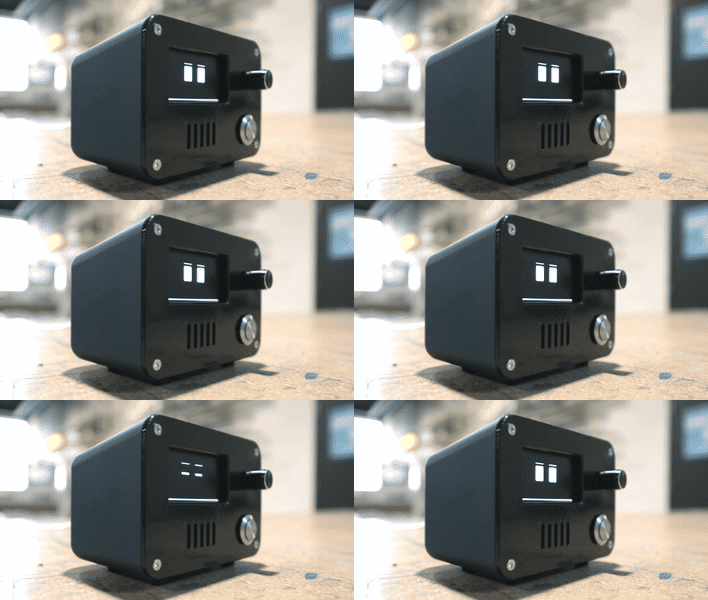
As part of the Arduino UNO Q Dream Lab Challenge hosted in collaboration with DigiKey, makers and innovators were challenged to push the boundaries of what is possible with the dual-brain Arduino® UNO Q board and Arduino® App Lab. From an incredible pool of creative submissions showcasing the board’s unique dual-brain architecture, this entry emerged as one of the top winning designs.
30 years ago, Tamagotchi took the world by storm to become one of the biggest fads of the ’90s. People felt compelled to care for their little digital pets and even felt genuine distress if a pet met its virtual demise. One can leverage that surprisingly powerful motivation, which is why Reed Bigham built this Tamagotchi-like device to be his Morse code tutor.
“Writing” Morse code – or even “reading” it – is one of those skills that you can really only learn through repetition. But that repetition can be kind of boring. It is like learning to play piano, but without the pretty music. This device, called DIT, is designed to gamify that process and create motivation through good old-fashioned guilt.
That’s because the user can only keep their DIT pet sustained by feeding it Morse code.
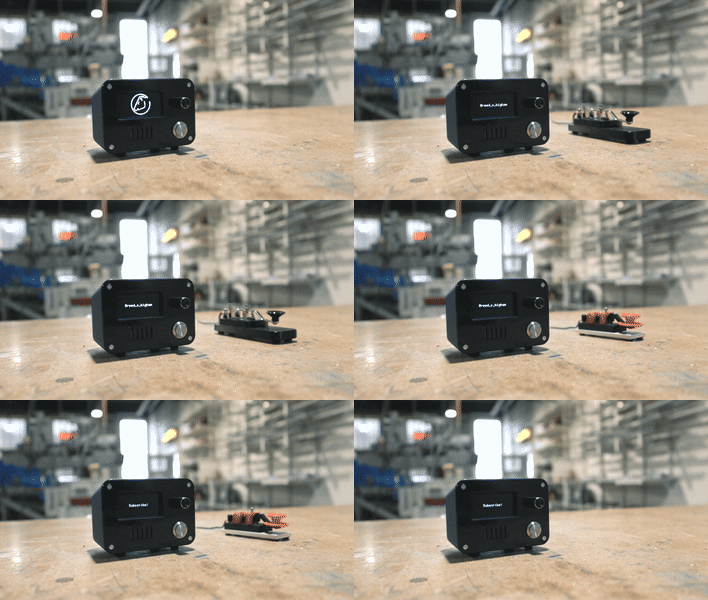
The concept is the same as a Tamagotchi, but you can’t simply tap a button to give the pet food. Rather, you must tap a key and do it in the right pattern.
The “right pattern” depends on the mode. There are flash cards, games based on imitating games, and writing apps if you just want to do your journaling via Morse code. There is even a radio simulator mode, in which you communicate with an LLM through Morse code messages.
Bigham built the device around an UNO Q board. The Morse code interpreter runs on the STM32 microcontroller side, timing the key circuit as it opens and closes to detect dots and dashes. All of the software runs on the Linux side, receiving the dots and dashes over the router bridge.
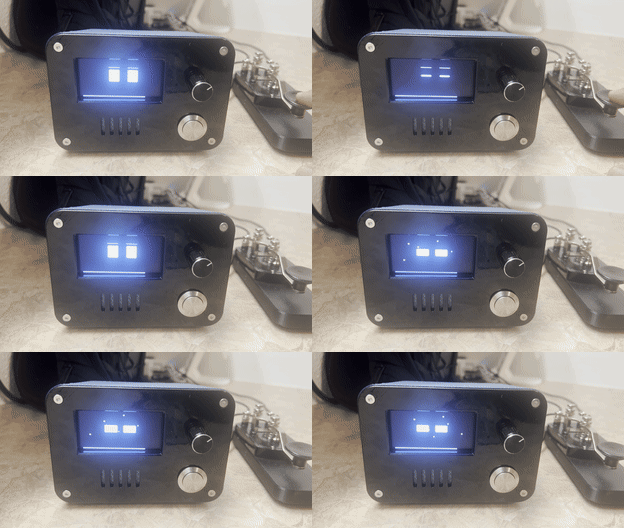
A small screen displays a stylized set of eyes for the pet to create that all-important emotional element, so the user feels compelled to keep it fed. Thus, the learning cycle becomes a moral imperative.
If you’ve ever wanted to learn Morse code, this could be the ideal way to do it! You can find all of the build files over on this GitHub repo.
Arduino, UNO, and the Arduino logo are trademarks or registered trademarks of Arduino S.r.l.
The post Want to learn Morse code? This Tamagotchi-like device will be your teacher appeared first on Arduino Blog.
Read more here: https://blog.arduino.cc/2026/11/23/want-to-learn-morse-code-this-tamagotchi-like-device-will-be-your-teacher/